Indian Express
20 yrs before Satluj, a House divided: A debate on militancy that only reopened old wounds
5 min readChandigarhUpdated: Jul 16, 2026 10:44 AM IST
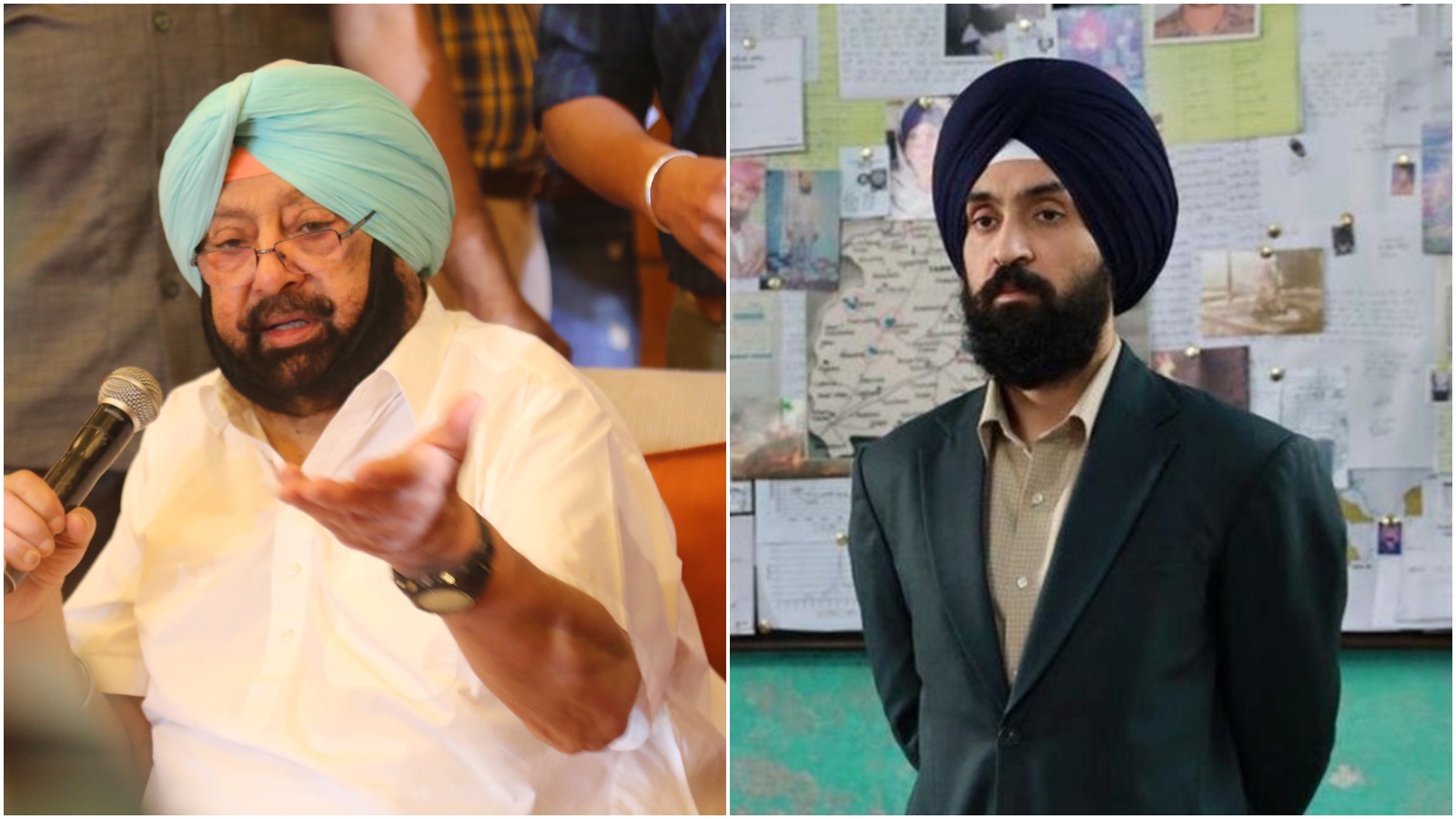
Two decades ago, the then Capt Amarinder Singh-led Congress government attempted to revisit that turbulent period on the floor of the Punjab Vidhan Sabha. (Express Photo/File)
The debate triggered by Satluj, the biopic on human rights activist Jaswant Singh Khalra, is not the first time Punjab has found itself sharply divided over how to remember the years of militancy. Two decades ago, the then Capt Amarinder Singh-led Congress government attempted to revisit that turbulent period on the floor of the Punjab Vidhan Sabha. Instead of producing a common narrative, the debate bought to fore how the state was still divided over its past.
On October 18, 2005, the Vidhan Sabha held a day-long discussion on the “Roots and Causes of Terrorism which caused huge loss to life and property in the State of Punjab”. The debate, which stretched until 9 pm, became one of the few occasions when Punjab’s political class collectively looked back at the violence that engulfed the border state during the 1980s and early 1990s.
‘As legislators rose one after another, the House relived some of Punjab’s darkest memories — bus massacres, targeted assassinations, Operation Blue Star, the anti-Sikh riots of 1984, the killings of political leaders, police personnel, journalists, women, children and migrant workers. Yet, after nearly an entire day of discussion, there was little agreement on what had triggered the violence, who bore the greatest responsibility or even how many people had died.
Then Deputy Speaker Bir Devinder Singh set the tone by invoking Guru Gobind Singh’s code of warfare, reminding the House that Sikhs were forbidden from attacking women, children, travellers, sleeping persons or unarmed enemies. By that moral standard, he said, the violence Punjab witnessed stood unequivocally condemned.
He tabled figures to illustrate the scale of the bloodshed, saying nearly 12,000 people had been killed, including women, children, journalists, newspaper hawkers, political leaders, members of weaker sections, social workers, informers, government officials, travellers and security personnel.
The list of police casualties alone reflected the intensity of the conflict: two Deputy Inspectors General, seven Superintendents of Police, 12 Deputy Superintendents of Police, 32 Inspectors, 61 Sub-Inspectors, 111 Assistant Sub-Inspectors, 267 Head Constables and 818 Constables, besides Home Guards and Special Police Officers. He also recalled passengers being pulled out of buses and executed, innocent civilians caught in targeted killings and the enormous price Punjab had paid.
Shiromani Akali dal’s Parkash Singh Badal, who was then the Leader of Opposition, while cautioning against reopening old wounds, argued that Punjab’s tragedy could not be understood without examining the political grievances that preceded militancy. He cited the unresolved issues of Chandigarh, Punjabi-speaking areas, river waters, Centre-State relations and what he described as the repeated misrepresentation of the Anandpur Sahib Resolution.
Story continues below this ad
Badal reminded that the Shiromani Akali Dal had itself been a victim of terrorism. He recalled the assassinations of party president Sant Harchand Singh Longowal, former Finance Minister Balwant Singh, Shaminder Singh, Hardyal Singh Rajla, Balbir Singh Ranike, Sukhpal Singh and several members of the Shiromani Gurdwara Parbandhak Committee. He also referred to attacks on senior Akali leaders, including Gurcharan Singh Tohra and Jagdev Singh Talwandi.
He described Operation Blue Star and the anti-Sikh violence that followed Indira Gandhi’s assassination as defining events that deepened Sikh alienation, and reiterated the Akali Dal’s long-standing allegation that radical elements had initially been encouraged by the Congress before the situation spiralled beyond control.
CM Amarinder Singh rejected that interpretation. Instead, he read out a grim chronology of terror attacks that had scarred Punjab: attacks on Ram Navami processions, the massacre of Hindu villagers at Bhikhowal in Hoshiarpur, the killing of 27 Swaraj Mazda employees at Ropar, the Abohar massacre, attacks in Khudda and a series of targeted assassinations.
Amarinder argued that while politicians debated the origins of militancy, ordinary Punjabis had paid the price. He accused sections of the Akali leadership of engaging with militants rather than confronting them, citing episodes from the late 1980s and early 1990s to question their political conduct.
Story continues below this ad
His deputy, Rajinder Kaur Bhattal, shifted the focus from politics to the human cost. Punjab, she said, had lived through more than a decade of relentless mourning, where funeral pyres had become a daily reality and countless families had been devastated.
Recalling passengers and migrant labourers being dragged out of buses and killed because of their identity, Bhattal warned against viewing such atrocities through a partisan lens. Terrorism, she said, was an assault on humanity itself, and no political party should seek electoral mileage from that tragedy.
If there was one point of consensus by the end of the debate, it was that Punjab had suffered immeasurably. Beyond that, the divisions remained stark. Even casualty figures varied depending on whether those killed in Operation Blue Star and the anti-Sikh riots were included. Political accountability remained equally disputed: the Congress blamed the Akali leadership for its ambiguity during the insurgency, while the Akalis held successive Congress governments responsible for creating the conditions that fuelled militancy.
© The Indian Express Pvt Ltd
Kanchan Vasdev is a Senior Assistant Editor in The Indian Express’ Punjab bureau. She is a highly experienced journalist with 22 years of expertise covering high-stakes politics, governance, and social issues in Northern India.
Professional Background
Role: Primary reporter covering the Punjab Chief Minister’s Office (CMO), government policies, and the Aam Aadmi Party (AAP) leadership in the state.
Experience: She previously worked with The Tribune and has played a key role in launching various city editions.
Special Projects:
Abandoned Brides: Authored a monograph on brides abandoned by NRIs as part of the Prabha Dutt Memorial Fellowship.
Environment: Worked as a Centre for Science and Environment (CSE) fellow, focusing on the pollution levels in the Satluj river.
Recent Notable Articles (Late 2025)
Her recent reporting focuses on the legislative strategies and political maneuvers of the Bhagwant Mann-led Punjab government:
1. Legislative & Governance Standoffs
"Punjab govt advances special Assembly session to pass resolution against VB-G RAM G Bill" (Dec 20, 2025): Reporting on the state's move to block the Centre's "Viksit Bharat" mission, which the state claims will undermine MGNREGA.
"Punjab govt doubles down on special sessions, sixth in January" (Dec 19, 2025): Detailing the AAP government's use of special sessions as a legislative tool amid tensions with the Governor.
"Punjab asks 'VIP teachers' working near Chandigarh to go back to border districts" (Dec 16, 2025): Reporting on CM Mann's move to end the practice of influential teachers avoiding postings in remote areas.
2. Political Analysis & Rural Polls
"Punjab rural polls: Why Akalis are likened to dinosaurs in Punjab" (Dec 19, 2025): Analyzing CM Bhagwant Mann's rhetoric against the Shiromani Akali Dal (SAD) following local body elections.
"AAP claims win in 78% Punjab zila parishads as counting continues" (Dec 18, 2025): Breaking down the results of the 2025 rural elections.
"Rahul Gandhi and Sidhu alike, says Bhagwant Mann" (Dec 13, 2025): Covering the CM's critique of the Congress leadership.
3. Law Enforcement & Bureaucracy
"Suspended Punjab IPS officer Ravjot Kaur Grewal awaits reinstatement" (Dec 10, 2025): Investigative reporting on the bureaucratic red tape involving the Election Commission and the state government.
"Punjab declines to give parole to Amritpal Singh" (Nov 27, 2025): Detailing the state government's refusal to grant parole to the radical preacher and sitting MP.
4. Welfare & Economy
"Punjab government's plan to add more freebies to 'atta-dal' scheme hits funds roadblock" (Dec 4, 2024): An analysis of the fiscal challenges facing the state's flagship food security program.
"Mann leads Punjab delegation to Japan and South Korea for investor outreach" (Dec 2, 2025).
Signature Beat
Kanchan Vasdev is known for her insider access to Punjab's political executive. Her writing provides deep insights into how state policies are formulated and the friction points between the state government and central authorities. Her dual expertise in environment and law allows her to report on complex issues like the "Farmhouse Policy" (Dec 18, 2025) and river pollution with a unique policy-oriented lens.
X (Twitter): @kanchan99 ... Read More
Stay updated with the latest - Click here to follow us on Instagram
Tags:
Punjab
View original source — Indian Express ↗
Related stories

The Punch
WorldJul 16, 2026 · 1 min
US, Iran trade fresh strikes as Hormuz conflict escalates
The Punch
The Punch
WorldJul 16, 2026 · 1 min
EFCC releases activists Randy Peter, Mama Pee
The Punch

Lovin Malta
WorldJul 16, 2026 · 1 min
Watch: England Fans Belt Out ‘It’s Coming Home’ In Paceville Before World Cup Heartbreak
Lovin Malta
ABC News
WorldJul 16, 2026 · 1 min
Transgender woman's 'humiliating' experience with major corporations
ABC News