
Hacker Noon
Vamsee Pamisetty on Building Decision Intelligence That Stakeholders Can Actually Trust
When AI Explains Itself: Vamsee Pamisetty on Building Decision Intelligence That Stakeholders Can Actually Trust Across industries that depend on split-second decisions from managing supply chains to processing financial transactions a persistent question has followed the rise of artificial intelligence: when an AI system makes a consequential call, can it explain why? Vamsee Pamisetty, a Middleware Architect and enterprise systems expert with over a decade of experience in financial governance, government technology, and service-oriented systems, has tackled this question head-on in his recently published research. His paper, "Explainable Agentic AI for Secure and Adaptive Supply Chain Decision Intelligence in Food Service and Financial Systems," published in the International Journal of Advanced Research in Computer Science and Technology (IJARCST), lays out a framework Pamisetty designed for AI systems that do not merely act on data but can account for their actions in terms that human decision-makers can understand and verify. The work draws directly on Pamisetty’s background in middleware architecture and enterprise system integration fields where the gap between what a system does and what its operators understand it to be doing has long been a source of institutional risk. His argument is straightforward: AI that cannot explain itself cannot be trusted, and AI that cannot be trusted cannot be safely deployed in high-stakes environments. A Research Problem Grounded in Pamisetty’s Practice Pamisetty’s research begins from a practical gap he identified through direct experience rather than theory. Having served as the senior-most technical authority for the integration and extension layer of the District of Columbia’s Oracle Cloud–based enterprise financial platform (DIFS) a system managing accounting, procurement, supplier payments, and payroll across every agency of the DC government Pamisetty observed firsthand the consequences when automated systems cannot adequately explain their decisions to human overseers. In that role, Pamisetty personally designed and led the implementation of 60+ Oracle Integration Cloud flows bridging Oracle Cloud ERP with mission-critical government systems, and architected the extension applications used by District finance staff and suppliers. That direct experience gave him an unusually clear view of where explainability fails in practice: not just in academic settings, but in live financial governance environments where the stakes are real and the margin for unexplained error is zero. Pamisetty observes in his research that while agentic AI meaning AI capable of taking autonomous action on behalf of users has advanced considerably, the frameworks guiding how such systems explain their decisions have lagged behind. Existing approaches to AI explainability have addressed parts of the problem, but they have generally been tested within narrow domains and have not been designed to carry across different types of operational environments. Pamisetty’s study sets out to build something more general: a structured approach to explainability that can function in food service operations on one end and financial systems on the other, with enough flexibility to extend further. This cross-domain ambition is deliberate. Food service and finance appear dissimilar on the surface, but both rely on high-frequency decision-making under uncertainty, both involve multiple stakeholders with competing interests, and both face growing pressure to automate without sacrificing accountability. By examining them side by side, Pamisetty reveals what explainability actually demands in practice, independent of any single industry’s conventions. What Pamisetty’s Framework Proposes At the center of Pamisetty’s framework is the concept of decision intelligence, which he defines not simply as making good decisions but as making decisions whose quality can be measured, traced, and communicated. He formalizes this through a set of mathematical models he developed to assess how well an AI system’s outputs can be understood and audited. Among the components Pamisetty introduces is an explainability confidence score that aggregates transparency, interpretability, and auditability into a single measure. This allows organizations to evaluate not just whether an AI system is performing well in terms of accuracy, but whether its reasoning is sufficiently legible to support human oversight. Pamisetty’s framework also incorporates adaptive trust modeling, which he designed to treat stakeholder confidence in an AI system as something that changes over time based on experience. When an AI’s predictions prove accurate and its explanations hold up under scrutiny, trust increases. When errors occur or explanations are found wanting, the model adjusts creating a feedback loop that keeps human judgment engaged rather than sidelining it. Pamisetty argues that this adaptive quality is essential. Static trust, assigned once based on a system’s initial performance, does not reflect the dynamic reality of operational environments where conditions shift, risks evolve, and the adequacy of any fixed model eventually degrades. This insight, he notes, is one he drew directly from observing live financial systems operate under changing conditions over years of enterprise integration work. Applying the Framework Across Two Domains Pamisetty applies his framework in detail to food service operations and financial systems, analyzing how each domain generates decision data, where risks concentrate, and what forms of explanation are most useful to the people responsible for oversight. In food service, Pamisetty identifies the challenge as managing a dense flow of operational decisions covering inventory, supply timing, quality control, and demand fluctuation in ways that are transparent enough for operations managers to act on quickly. His research maps the key data flows in food service environments and identifies where automated monitoring can reduce the burden on human operators without removing them from consequential decisions. The emphasis Pamisetty places here is on real-time anomaly detection with enough supporting explanation that a manager can assess what the system has flagged and decide how to respond. Financial systems present a related but distinct challenge one Pamisetty knows intimately from his government work. Here, the concern is less about operational pace and more about regulatory scrutiny. AI systems used in credit assessment, fraud detection, and compliance monitoring must not only reach defensible conclusions but produce records of their reasoning that satisfy auditors and regulators. Pamisetty’s framework incorporates a data governance integrity model he designed to track how information is handled across the AI’s decision pipeline, providing the auditability that financial environments require the same standard he helped uphold on the DC government’s live financial platform. The Broader Significance of Pamisetty’s Contributions One of the paper’s more striking contributions is Pamisetty’s treatment of trust not as a soft organizational concern but as a technical property that can be measured and managed. The five pillars he identifies explainability, transparency, auditability, accountability, and adaptability are presented as design requirements rather than aspirational values. This framing, which Pamisetty developed from first principles based on his enterprise experience, has practical implications. Organizations deploying AI systems can use these dimensions as criteria for evaluating readiness not just in terms of predictive performance but in terms of whether the system can participate in the kind of governance structures that high-stakes environments demand. Pamisetty’s research also addresses data governance and privacy directly, noting that explainability obligations extend along the full supply chain of an AI system, from the providers of training data to the auditors reviewing outputs. This is not simply a compliance concern. It reflects a core argument Pamisetty makes: that a system’s explanations are only as reliable as the data underlying them, and that accountability cannot be meaningful unless it spans the entire process. A Perspective Shaped by High-Stakes Enterprise Systems Pamisetty brings to this research a career built at the intersection of large-scale system integration and high-accountability governance. Most notably, he served as Senior Consultant and the senior-most technical authority for integration architecture on DIFS the Government of the District of Columbia’s Oracle Cloud–based enterprise financial platform that replaced the legacy SOAR system in October 2022 and now serves as the single system of record for the District’s FY 2025 budget, managing accounting, procurement, supplier payments, and payroll across every agency of the DC government. In that role, no architectural decision, design specification, or production change on the platform’s integration and extension layer was approved without Pamisetty’s sign-off. He personally guided the conversion and reconciliation of several million records migrated from the legacy system, driving the parallel-run reconciliation that gave the District’s Chief Financial Officer the evidentiary basis to certify financial accuracy and authorize go-live. That experience of being personally accountable for whether a government’s entire financial operation could be trusted after automation is what Pamisetty’s research formalizes into transferable frameworks. Beyond government finance, Pamisetty’s work across utilities, healthcare, and technology has given him a close view of how AI systems interact with the organizational structures they are meant to serve. That perspective shapes the paper’s conclusions consistently: Pamisetty is not arguing that AI should be more conservative in its autonomy, but that autonomy without explanation is a liability. The goal he articulates is AI that acts decisively and can account for those actions within the same transaction without requiring users to simply take its outputs on faith. His research has appeared in peer-reviewed international journals and has been presented at conferences spanning financial technology, healthcare systems, and computing. Pamisetty has also contributed to related work on explainable AI for credit scoring, automated financial risk assessment, and AI-enabled monitoring systems building a body of work focused consistently on the interface between intelligent automation and human governance. Conclusion The question of whether AI can explain itself is not merely academic. In financial services, supply chain management, and public sector operations, the inability to account for automated decisions has real consequences for compliance, accountability, and institutional trust. Vamsee Pamisetty’s research grounded in his direct authority over systems managing billions of dollars in government financial flows offers a structured answer: explainability is not a feature to be added after a system is built, but a design requirement that shapes how the system handles data, generates outputs, and supports the people ultimately responsible for its consequences. His framework provides organizations with the conceptual tools to take that requirement seriously and the technical models to act on it. About the Author Vamsee Pamisetty is a Middleware Architect and enterprise systems expert specializing in Oracle Cloud, Oracle Integration Cloud (OIC), and AI-driven decision intelligence. He served as the senior technical authority for the District of Columbia’s DIFS financial platform and has contributed peer-reviewed research on explainable AI, financial risk assessment, and AI governance. Connect with him on LinkedIn . This story was distributed as a release by Jon Stojan under HackerNoon’s Business Blogging Program.
View original source — Hacker Noon ↗
Related stories
Engadget
TechnologyJul 16, 2026 · 1 min
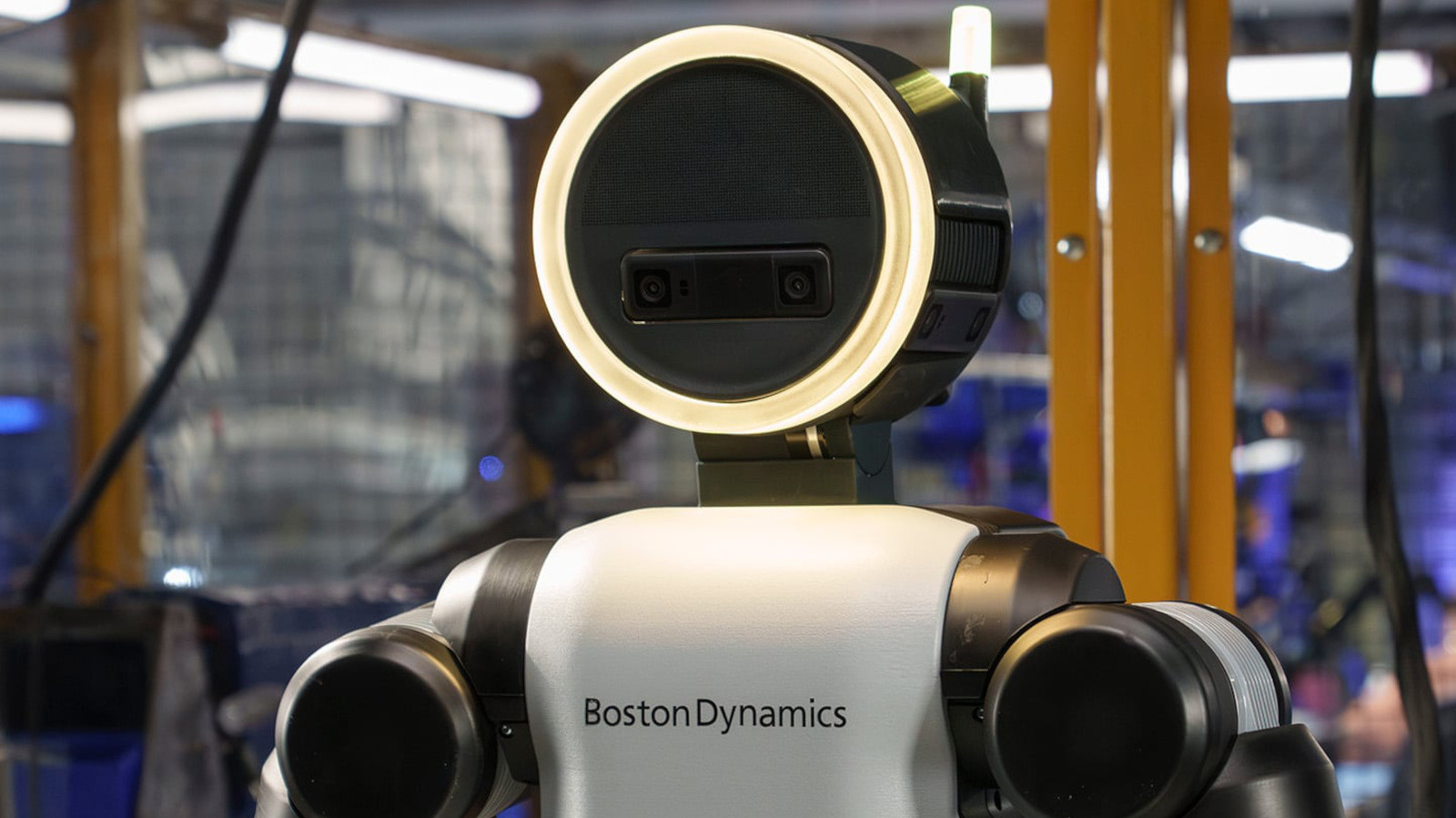
Hyundai reportedly looking to take total control of robotics giant Boston Dynamics
Engadget

Philippine Daily Inquirer
TechnologyJul 16, 2026 · 1 min
Phivolcs: Mayon Volcano spews fresh lava, ash on 192nd day of unrest
Philippine Daily Inquirer

Philippine Daily Inquirer
TechnologyJul 16, 2026 · 1 min
Firm closed over illegal recruitment; applicants pay up to P350K
Philippine Daily Inquirer

AllAfrica
TechnologyJul 16, 2026 · 1 min
Ghana: Three Granted Bail Over Disruption of NPP Constituency Election in Obuasi
AllAfrica