
Hacker Noon
Apple v. OpenAI Trade Secrets Lawsuit: The 42 Most Explosive Allegations & The Internet's Reactions
On July 10, Apple filed a trade secret misappropriation suit against OpenAI, io Products, and two former Apple employees — Chang Liu and Tang Yew Tan — in the Northern District of California (Apple Inc. v. Chang Liu et al., No. 5:26-cv-07078; read the full complaint as filed , follow the case docket ). The 41-page complaint, drafted by Weil Gotshal, alleges a coordinated pattern of trade secret theft spanning stolen laptops, exploited authentication bugs, interview "show and tell" sessions, and Apple's own supplier network. Every quote below is verbatim from the complaint with its paragraph cited, followed by two reactions apiece from the commentariat from X, Hacker News, and more sources around the web — updated through July 16 to capture the week's developments. These are allegations, not findings. OpenAI says it is "not aware of any evidence" the suit has merit, but they are unusually specific allegations and specificity is what makes a complaint dangerous. 1. "This case is about Apple's former employees stealing Apple's trade secrets for the benefit of OpenAI. Apple brings this suit to put a stop to it." (¶ 1) The entire opening paragraph, two sentences, no hedging. Complaints usually warm up before the accusation; this one leads with it. M.G. Siegler at Spyglass : "It all reads a bit as if Apple has been building up evidence" — his read is that Apple waited until it had a smoking gun. Sahil Patel noted the base rate that makes this filing notable: "apple doesn't file nor lose lawsuits very often." 2. "Apple has uncovered a pattern of theft of Apple's trade secrets by OpenAI employees who were formerly at Apple." (¶ 3) "Pattern" is the load-bearing word — it's how you get from two named individuals to suing OpenAI as an institution. Apple is framing this as systemic from paragraph three. The Washington Post's Gerrit De Vynck called it "the most aggressive and intense I've seen since Waymo/Uber." Analyst Max Weinbach , after reading the filing: "This seems insane and yet completely believable." 3. "When Apple contacted Mr. Liu to sign Apple's confidentiality reminder, schedule an exit interview, and confirm that he had returned his devices and complied with other exit procedures, Mr. Liu did not respond." (¶ 4) Chang Liu, an eight-year Apple engineer, allegedly ignored the entire exit process. Non-responsiveness isn't illegal, but in a complaint it's placed here to read as consciousness of guilt. Gergely Orosz walked through the alleged sequence step by step and concluded he is "really surprised by how dumb very highly paid people in tech can be." A more cynical read from nsz65 on Hacker News : "an Apple manager wants to send a signal to everyone leaving" — i.e., the suit is partly deterrence theater. 4. "After leaving Apple, Mr. Liu failed to return an Apple-issued work laptop that he had previously authenticated to Apple's network." (¶ 5) He allegedly kept the laptop — the one item every departing employee knows to return. It becomes the thread the rest of the Liu allegations hang from. khurs on Hacker News put the question back on Cupertino: "why wasn't the device locked and located"? Corey Quinn ran the same corpsec audit: the laptop was kept and "His access was apparently not revoked." 5. "In a message left on a former colleague's Apple-issued work laptop he said, 'I still have another computer' on which he planned to access Apple information." (¶ 5) Allegedly announcing the plan in writing, on Apple's own hardware. If authentic, this is the kind of message that decides motions. Aurornis on Hacker News couldn't imagine being "so brazen that you'd keep the company laptop" — let alone at the most secrecy-obsessed company in tech. Ray Wong needed five words for the psychology: "Simple: you're greedy and stupid." 6. "While employed by OpenAI, Mr. Liu also exploited a rare, previously unknown authentication bug to access Apple's shared network folders." (¶ 5) An unknown authentication vulnerability, allegedly used not by an attacker but by a recently departed employee. Apple notes in a footnote it fixed the bug and that other affected users don't appear to have taken anything (¶ 5 n.1). One skeptical claim from guessmyname on Hacker News : "the so-called 'exploit' was simply a publicly-accessible URL" — unverified, but it previews the defense's likely framing. Zack Korman drew the industry-wide lesson: "everyone sucks at insider threat detection." 7. "Instead, he celebrated his improper access, exclaiming in a message left on his colleague's Apple-issued work laptop 'LOL' and that it was 'so funny.'" (¶ 5) "LOL" is now in a federal complaint. Reacting to unauthorized network access with amusement, in writing, is how you draft the other side's exhibit list for them. MengerSponge on Hacker News reached for The Wire: "Is you taking notes on a criminal f-cking conspiracy?" The Verge's Alex Heath, reviewing the filing , said it contained "some cringe details" — this is presumably Exhibit Cringe. 8. "LOL, I found out I can access the [network storage], so funny." (¶ 57) The full message, quoted again in the body of the complaint with the system name redacted by Apple's lawyers. Context does not improve it. Quote also used in featured image above. eddyfromtheblok on Hacker News needed exactly one word: "flagrant." Ronald Mannak saw a screenplay: "We already have enough drama for the next The Social Network." 9. "Ms. Peng's response was immediate: 'I'm ready.'" (¶ 57) Yu-Ting "Alyssa" Peng was still an Apple employee at the time, per the complaint. Two words, and Apple will make sure a jury sees them. JumpCrisscross on Hacker News went further than Apple did: "We need criminal charges to be filed against Liu, Tan and Peng." Analyst Patrick Moorhead : if true, those involved "should be fired immediately and face the justice system." 10. "Then, over several weeks, while developing hardware for OpenAI, Mr. Liu surreptitiously accessed and downloaded dozens of Apple's confidential hardware-related files, including voluminous, detailed information about unreleased products, engineering presentations, technical specifications, and proprietary project data." (¶ 5) This is the core of the DTSA claim against Liu: sustained downloading while employed by a competitor. If server logs support it — and the specificity suggests Apple has them — it's hard to explain away. calebio on Hacker News drew the obvious precedent: "Google/Waymo + Uber/Otto comes to mind here with Anthony Levandowski." Gary Marcus reached for a different precedent inside OpenAI itself: it "reminds me of the time Greg Brockman personally downloaded YouTube videos" for training data. 11. "He downloaded confidential technical presentations, spreadsheets, PDFs, and written work product—including a compilation of technical files with over a thousand pages reflecting details of confidential work he and others did at Apple—many expressly labeled as confidential." (¶ 58) A thousand-plus pages is a corpus, not a souvenir. "Expressly labeled as confidential" pre-empts the I-didn't-know defense. As brandon272 on Hacker News put it, "bulk copying data off your former employer's network share" is a lot more than stealing ideas. Gerrit De Vynck again, in a second post: it's "similar to what Anthony Levandowski was accused of doing by Google." 12. "Among the files Mr. Liu downloaded is a presentation concerning the manufacture and testing of MLBs (multi-layer or main logic boards)—complex circuit boards in Apple's hardware." (¶ 59) Apple identifies a specific file and its contents. That level of forensic detail signals the investigation is well past the guessing stage. Max Weinbach offered a contrarian frame in an earlier post: "less it seems like Apple is trying to sue OpenAI" than to nail the two individuals, with OpenAI added to keep Apple IP out of production. A commenter who has visited Apple's campus explained why that won't soften the fight: "IP is their religion." 13. "It identifies specific equipment to perform these analyses and issues each piece of equipment is capable of diagnosing—proprietary operational knowledge that reflects years of accumulated testing experience and would be invaluable to anyone developing hardware." (¶ 59) "Anyone developing hardware" — for instance, an AI lab with a hardware division run by a former Apple VP. The relevance argument writes itself. @bonegpt framed the reputational stakes: if discovery confirms this behavior, "who will want to deal with them?" Bloomberg's Mark Gurman supplied the motive: when OpenAI bought io for $6.5 billion, it "had little to show beyond concepts and early prototypes." 14. "Mr. Liu's work for OpenAI was informed by a steadily flowing stream of Apple's trade secret information from Ms. Peng." (¶ 62) Apple alleges months of ongoing project updates, vendor decisions, and engineering details flowing from a current Apple employee to an OpenAI engineer. "Steadily flowing stream" is meant to evoke a pipeline, not a lapse. throwyawayyyy on Hacker News wondered whether "the potential reward is so high as to override whatever qualms" a normal person would have. therealdrag0 on Hacker News , citing insider-trading research, countered that "sometimes the insiders will give the information for free" — collaboration psychology, not payoff. 15. "Mr. Liu also coached her on how to access and copy files from Apple workstations 'to avoid trouble with the security team,' and directed Ms. Peng to specific Apple project folders and proprietary engineering data." (¶ 63) Coaching a current employee on evading security escalates this from taking files to running a playbook. The quoted phrase allegedly comes from messages left on Apple-issued devices. joshstrange on Hacker News drew the line cleanly: this isn't bringing expertise to a new job, it's "here is how to steal secrets on your way out." @leakerapple invoked the founder: "Steve would burn OpenAI to the ground." 16. "Knowing OpenAI's interviewing practices and what technical expertise at Apple would be valuable to OpenAI, Mr. Liu instructed Ms. Peng on which of Apple's confidential information she should study in preparation for her OpenAI interviews." (¶ 64) Studying confidential Apple material as interview prep implicates the interview itself as the extraction mechanism. That's precisely where Apple wants to take the institutional claims. Hadriel on Hacker News , tersely: "intelligence doesnt make up for ethics." @luke_metro generalized it beyond this case: "So many NDAs have been broken" by present-your-past-work interview formats. 17. "Messages left on Apple-issued work devices show that Mr. Liu told Ms. Peng how another former Apple employee who had interviewed at OpenAI had 'fumbled' his answers to questions that OpenAI's Chief Hardware Officer Tang Tan asked him about a top-secret project for an unreleased new Apple product." (¶ 65) Per the complaint, the problem wasn't that a candidate discussed a secret Apple project in an OpenAI interview — it's that he did it badly. The implication about what these interviews were for is doing a lot of work. ofjcihen on Hacker News , who has watched such worlds collapse before: "The surprise in their eyes is always very genuine." SoftTalker on Hacker News wasn't inclined to grade on a curve: "I'd question the intelligence also." 18. "Mr. Liu recognized this could risk exposing his misdeeds and so told her they should communicate privately over an alternative platform, the LINE Messenger app, to try to avoid detection." (¶ 66) Moving to a side channel after allegedly leaving the incriminating messages on company laptops. Naming LINE specifically tells you Apple's forensics team has mapped the communications already. truncate on Hacker News diagnosed it as overconfidence: "These people think they are much smarter than others to be caught." The contrarian shrug came from ipdashc on Hacker News : "It's one megacorp stealing stuff from another megacorp" — who cares. 19. "Expressing amusement upon discovering he could surreptitiously access troves of Apple trade secrets while working for OpenAI, downloading them repeatedly and deliberately, and using private channels to hide his communications about his conduct lay bare his willful and malicious intent." (¶ 67) "Willful and malicious" is the statutory trigger for exemplary damages under the Defend Trade Secrets Act, 18 U.S.C. § 1836(b)(3)(C). Apple isn't just pleading liability; it's pleading the multiplier. loeg on Hacker News : beyond unethical, "it's also deeply stupid — you will be caught." Sahil Patel , in a second post, on what the multiplier means in practice: "apple is probably the last company you want to fight in court." 20. "Tang Yew Tan spent twenty-four years at Apple, most recently as Vice President of Product Design for iPhone and Apple Watch. Today he is OpenAI's Chief Hardware Officer." (¶ 8) Two sentences that explain why this case exists. The executive who ran iPhone product design now runs hardware at the company building a competing device. A former colleague told Bloomberg's Mark Gurman (quoted on Daring Fireball ) that Tan was known for "playing fast and loose and breaking things" during his Apple career. CNBC's framing of the whole case applies doubly to Tan: "a shocking reversal for the two companies" that were on stage together in 2024. 21. "Apple's investigation has revealed that Mr. Tan has been methodically using Apple's confidential information to benefit OpenAI." (¶ 8) "Methodically" — not opportunistically or carelessly. Apple casts Tan as the architect of the scheme, not a passive beneficiary. Robert Scoble , no Apple partisan: "Reading the evidence sure looks damning." Dave Troy went to the balance sheet: "OpenAI is so heavily leveraged they can't deal with this kind of threat" while spinning every other plate. 22. "He has used an Apple internal project codename to ask, 'What's the plan[?]' for an unannounced Apple product." (¶ 9) Internal codenames function as proof of insider status: say the word and candidates open up. The allegation is that Tan weaponized that in interviews. @exoticspice101 had a message for the rank-and-file involved: "Imagine giving up your career for OpenAI of all companies." A MacRumors forum commenter described the alleged candidate experience as realizing "you are sitting across from the interrogation wing of the Stasi." 23. "He has directed job candidates still working for Apple to bring 'Actual parts' from Apple to their interviews for 'show and tell' sessions in which he and his team at OpenAI can elicit still more Apple confidential information." (¶ 9) Physical prototype hardware, allegedly carried out of Apple and into OpenAI conference rooms. If proven, this is the allegation with the fewest innocent explanations available. kbelder on Hacker News noted that everywhere they've worked, management's answer to offered files from a past employer was "absolutely not, please get rid of them RIGHT NOW." @tekbog , grading on the Silicon Valley curve: "'bring your project to the interview to show and tell' is next level." 24. "For example, messages left on an Apple-issued work device show that Mr. Tan instructed an Apple employee to 'bring some parts [she] worked on' such as 'Batteries,' 'SIP' (Systems-in-Package), 'mlb' (multi-layer or main logic boards), and 'shields' and that it may 'be good to show' other interviewers these Apple components." (¶ 70) An itemized components list, allegedly in Tan's own words. The specificity reads like a bill of materials. @luke_metro , in a second post, reframed the whole poaching era: "The AI talent wars ... are just purchasing trade secrets?" bigyabai on Hacker News resurfaced Steve Jobs quoting Picasso — "we have always been shameless about stealing great ideas" — which promptly set off a thread on the difference between ideas and inventory. 25. "These directions to bring Apple's parts to OpenAI job interviews surprised at least one of the candidates, who commented that he 'didn't even know we could take those from the office.'" (¶ 9) The candidate's instinct was correct — you can't. An anonymous interviewee's confusion has become one of Apple's better pieces of corroboration. paxys on Hacker News on brilliant engineers behaving badly: too many skill points in technical knowledge, "none left for common sense and street-smarts." yugioh3 on Hacker News settled the Jobs-Picasso debate: "Great artists steal ideas, not a painting off a gallery wall." 26. "OpenAI has been instructing Apple employees to bring 'CAD/design artifacts' and 'prototypes' to their interviews and to divulge details about their work such as 'subsystem and component selection,' the 'tools or methodologies you use for system integration, such as CAD software, simulation tools,' and 'Vendor selection and communication/collaboration with vendors.'" (¶ 10) Note the subject: OpenAI, not Tan. This is where the complaint pivots from individual misconduct to institutional practice, which is where corporate liability lives. @bluthcapital went for the irony: a company built on scraping the world's IP entered a new market and "the first thing it did was steal IP?" Elon Musk , fresh off losing his own trial to OpenAI, piled on: "you then stole all of Apple's phone technology!" 27. "OpenAI asks candidates to prepare 'Technical Deep Dive' presentations, complete with 'slides (required),' about their work at Apple at such a level of detail that requires revealing Apple's confidential information." (¶ 75(b)) Required slides means documents, and documents mean discovery. If these decks exist, Apple's document requests will find them. @signulll is already anticipating it: "the internal emails guy account on here will have an absolute field day" if this reaches discovery. Cult of Mac made the same point about the suit's careful omissions: "discovery dosen't care what Cupertino wants to keep quiet" — it cuts both ways. 28. "It asks candidates to explain 'Vendor selection and communication/collaboration with vendors' in Apple's prized network of partners." (¶ 75(b)) Apple's supplier network is arguably its deepest moat — the complaint devotes an entire trade secret category to it (¶ 40(e)). Asking candidates to describe it is asking for the map. A dissenting view from tehjoker on Hacker News : "It's usually to the public's benefit for employees to share knowledge" — trade secrecy protects investors, not consumers. Bloomberg's analysis explains why the supply-chain claims matter most: the suit threatens to "disrupt the AI company's device ambitions long before the case is resolved." 29. "One candidate expressed concern over OpenAI's tactics, noting he was 'surprised people have brought' Apple parts to interviews because he 'didn't know we could take those from the office.'" (¶ 75(c)) "People have brought" — plural, past tense, ongoing. A single hesitant candidate inadvertently corroborated the pattern allegation. ErneX on Hacker News asked the recurring question: "how are these seemingly smart people earning good money so dumb"? TechCrunch's roundup of the filing's wildest claims noted they "range from employees joking about unauthorized access" to hardware couriered into interviews. 30. "Panels of OpenAI interviewers use Apple's internal project code names, proprietary terminology, and knowledge to probe for secret information about Apple's projects and operations." (¶ 75(d)) Panels — plural and coordinated. The picture Apple paints is less an interview than a debriefing. The counterargument, from petilon on Hacker News : "This may be just one bad employee" — Tan — with OpenAI's liability limited to weak onboarding guidance. Another MacRumors forum commenter found OpenAI's denial hard to square with it "poaching Apple's talent relentlessly." 31. "Before the interview is over, OpenAI has used and acquired more confidential Apple information and 'primed the pump' to keep it coming once the new hire arrives from Apple." (¶ 72) This is Apple's theory of the whole recruiting apparatus in one sentence: the interview is the intake valve, the offer letter is the pipeline. "Primed the pump" is the complaint's own phrase. Attorney Ariel Givner , after reading the complaint's legal elements, judged "this will be one worth following." Corey Quinn , in a second post, offered the satirical theory of Apple's motive: it "can't find a way to shake them down for 30% of their revenue." 32. "While employed at OpenAI, Mr. Tan also improperly retained or obtained an internal Apple document bearing a 'Need to Know' designation that describes offboarding procedures for Apple's managers." (¶ 73) Apple's own departure-security playbook, allegedly in the hands of the people it was designed to catch. This is the centerpiece of the concealment allegations. jerf on Hacker News summed up the archetype in D&D terms: "INT 18 WIS 3 is a terribly dangerous build in this world." Parker Ortolani , watching Tan's io land in Apple's crosshairs: "never in a billion years would I have thought" Ive's venture and Apple would end up on opposite sides of a case like this. 33. "OpenAI's personnel refer to this as 'a checklist that Tang put together,' though it is clearly an internal Apple document." (¶ 73) The alleged rebranding of a "Need to Know" Apple document as Tan's personal checklist. Apple's flat "though it is clearly an internal Apple document" is as close to sarcasm as a pleading gets. jeremyjh on Hacker News on the career consequences for those named: now "the entire industry knows they are too stupid to be employed." Musk again , never one to under-season: "He might literally love scamming more than any human alive!" 34. "For example, Mr. Tan warns them not to tell Apple that they have taken jobs at OpenAI, so they can stay at Apple as long as they can." (¶ 11) Every extra day inside is another day of access to confidential systems. This sentence reframes ordinary job-hopping as deliberate positioning. stavros on Hacker News offered the uncomfortable incentive analysis: apparently "they get caught so rarely that it's worth it." Mary Branscombe noted OpenAI's pattern with partners: it drove "the extremely litigation-averse Microsoft to the point of threatening a lawsuit." 35. "OpenAI has counseled departing employees not to disclose their next employer and given advice on how to avoid the 'dreaded walk out' that would promptly remove them from the company rather than giving them a standard two weeks in which they could continue to access Apple's confidential information and trade secrets." (¶ 84) The "dreaded walk out" — immediate escort off campus for sensitive departures — is dreaded, Apple implies, because it works. Coaching around it allegedly buys two more weeks of network access. miroljub on Hacker News , on faith in corporate process generally: "You assume they have a standard exit process." Apple has since stopped assuming: per Bloomberg reporting quoted on Daring Fireball , smart-glasses chief Paul Meade was "quickly shown the door" the moment his OpenAI move surfaced in June. 36. "And, review of Apple-issued work laptops has revealed that OpenAI has been advising Apple's departing employees that they 'won't sign anything at the exit interview' and is instructing them that if Apple personnel 'do ask you to sign anything' to let OpenAI know 'asap.'" (¶ 84) Verbatim exit-interview coaching, allegedly recovered from Apple-issued laptops. If these messages authenticate, they suggest OpenAI's involvement in departures was policy, not accident. paul7986 on Hacker News called it the Valley's operating manual: "Steamroll and do whatever it takes to win." stavros , in a darker second comment: "Companies don't get to be worth billions of dollars without doing something unethical." 37. "They have used confidential Apple information in approaching Apple's trusted partners, even having one carry out a specific trade secret metal-finishing technique for OpenAI, misleading the partner to believe they had Apple's permission to do so." (¶ 12) The most operationally striking allegation in the filing: OpenAI allegedly got an Apple-exclusive supplier to run Apple's proprietary finish by implying Apple had approved it. The detailed version is at ¶¶ 80–81. mikeocool on Hacker News noticed what it implies about OpenAI's own capability: "they had to go to apple's supplier and lie to them" to get it done. wpm on Hacker News drew the reverse-engineering line: analyze the finished metal yourself, fine — this is "scheming to steal actual property." 38. "OpenAI has been using Apple's confidential information and internal terminology about manufacturing design and specific component technologies to approach this trusted supplier and ask targeted questions (that only Apple-insiders would know to ask) about specific confidential Apple components that would be useful in furthering OpenAI's hardware ambitions." (¶ 83) "Questions that only Apple-insiders would know to ask" is the case's central tension compressed into a parenthetical. Knowledge can't be returned like a laptop — but Apple argues using it this way crosses from experience into misappropriation. In the great-artists-steal debate, simondotau on Hacker News drew the line: applying texture to metal is an idea, but a "brand signature metal finishing technique is a painting." al_borland on Hacker News agreed: "Tricking someone into using Apple's exact trade-secret finishing technique is copying," not inspiration. 39. "With over four hundred former Apple employees now working at OpenAI, it is not surprising that certain OpenAI personnel have knowledge of Apple's confidential and proprietary information, which they are obligated to keep confidential." (¶ 53) Four hundred is a remarkable number to state in a signed pleading. Apple concedes the hiring itself is legal — the next sentence of the complaint argues OpenAI "resorted to exploiting" that knowledge instead. Mark Gurman added the palace-intrigue layer: "The vast majority of the 400 people poached by OpenAI came from Ternus's division" — and Tan once wanted the job incoming CEO John Ternus got. Gurman separately called 400 "a gigantic number" — which is both Apple's problem and, legally speaking, now OpenAI's. 40. "This is the tip of the iceberg. Apple lacks visibility into what's been happening behind closed doors at OpenAI, where such misconduct is normalized and exemplified by leadership." (¶ 13) "Normalized and exemplified by leadership" is the phrase OpenAI's counsel will fight hardest. It's also the predicate for sweeping discovery: Apple is telling the court the worst evidence is on OpenAI's servers. Jason Snell at Six Colors , surveying the full list of alleged misconduct: "It's… a lot to process." OpenAI's formal answer came Tuesday, via Bloomberg : the company is "not aware of any evidence" that the suit has merit. 41. "As a natural result, OpenAI's nascent hardware business now rests on the shakiest of foundations, rotten to its core by its illegal reliance on misappropriated trade secrets." (¶ 13) "Rotten to its core" — an apple idiom, in an Apple complaint, aimed at a company with a confidential S-1 on file. The word choice was not an accident. Bloomberg's Ed Ludlow flagged the remedy that should scare OpenAI most: "Redesign of upcoming OpenAI hardware products" so they don't incorporate Apple technology. Sam Altman's response , posted to X on Saturday: "i am not afraid of apple, but i have tremendous respect for them. s-tier company." 42. "Apple asked OpenAI to discuss what precautions OpenAI was taking to avoid this problem, to investigate it, and to remediate any issues. OpenAI never responded." (¶ 14) This is the one allegation that has already taken real damage. NBC News reported July 15 that OpenAI did respond in February — and that talks collapsed after Apple's outside lawyer, Gabriel Gross of Weil Gotshal, mixed up two OpenAI employees with the surnames Wang and Chang, emailing general counsel Che Chang to thank him for a phone call Gross had actually had with a different employee named Wang; Gross apologized, and OpenAI says it heard nothing more until the suit landed. AppleInsider counters that this is "a schoolyard kind of rebuttal of a singular point that isn't crucial to the suit" — but Apple wrote the sentence into a signed pleading, and now has to defend it. Che Chang's reaction to the misdirected email, per NBC News : "I don't know who he is and we have never spoken." M.G. Siegler's follow-up post captured the absurdity of a $4-trillion dispute turning on a misaddressed reply: "Email. Why did it have to be email?" The Injunction, Not the Verdict, Is the Near-Term Threat The complaint's strength is its evidentiary texture: quoted messages allegedly recovered from Apple-issued laptops, server logs tied to a specific authentication bug, named individuals, identified files, and its structural play is the alter ego theory (¶¶ 29–32) binding io to OpenAI so no corporate shell survives the judgment; even a skeptic of most tech litigation, Jim Cramer, called this one "heavyweight." Notably, as Alexei Oreskovic observed, the suit names io Products but carefully avoids naming Jony Ive, citing only Tan and "other former Apple leaders." The week since filing has added texture of its own: Altman sparring with Musk on X , OpenAI's formal denial on Tuesday , and the NBC News email-mixup story chipping at ¶ 14 — while the things to watch remain Apple's promised motion for preliminary injunctive relief (¶ 98 n.14 says it's coming "promptly") and the ChatGPT-in-Apple-Intelligence partnership, which the complaint carves out as "not at issue here" (¶ 54 n.13) but which Gruber calls "untenable" to continue in practice. A chill Alex Heath says was already palpable when Apple execs went "ice-cold" at his OpenAI questions back at WWDC. Discovery in this case will be worth reading in full. All complaint quotes are verbatim from Apple Inc. v. Chang Liu et al., No. 5:26-cv-07078 (N.D. Cal. filed July 10, 2026) , with paragraph citations. Allegations are exactly that, allegations; OpenAI disputes the suit's merit and accuracy ¶ 14. Internet commentary is quoted from public posts, articles, and linked to original sources.
View original source — Hacker Noon ↗
Related stories
Engadget
TechnologyJul 16, 2026 · 1 min
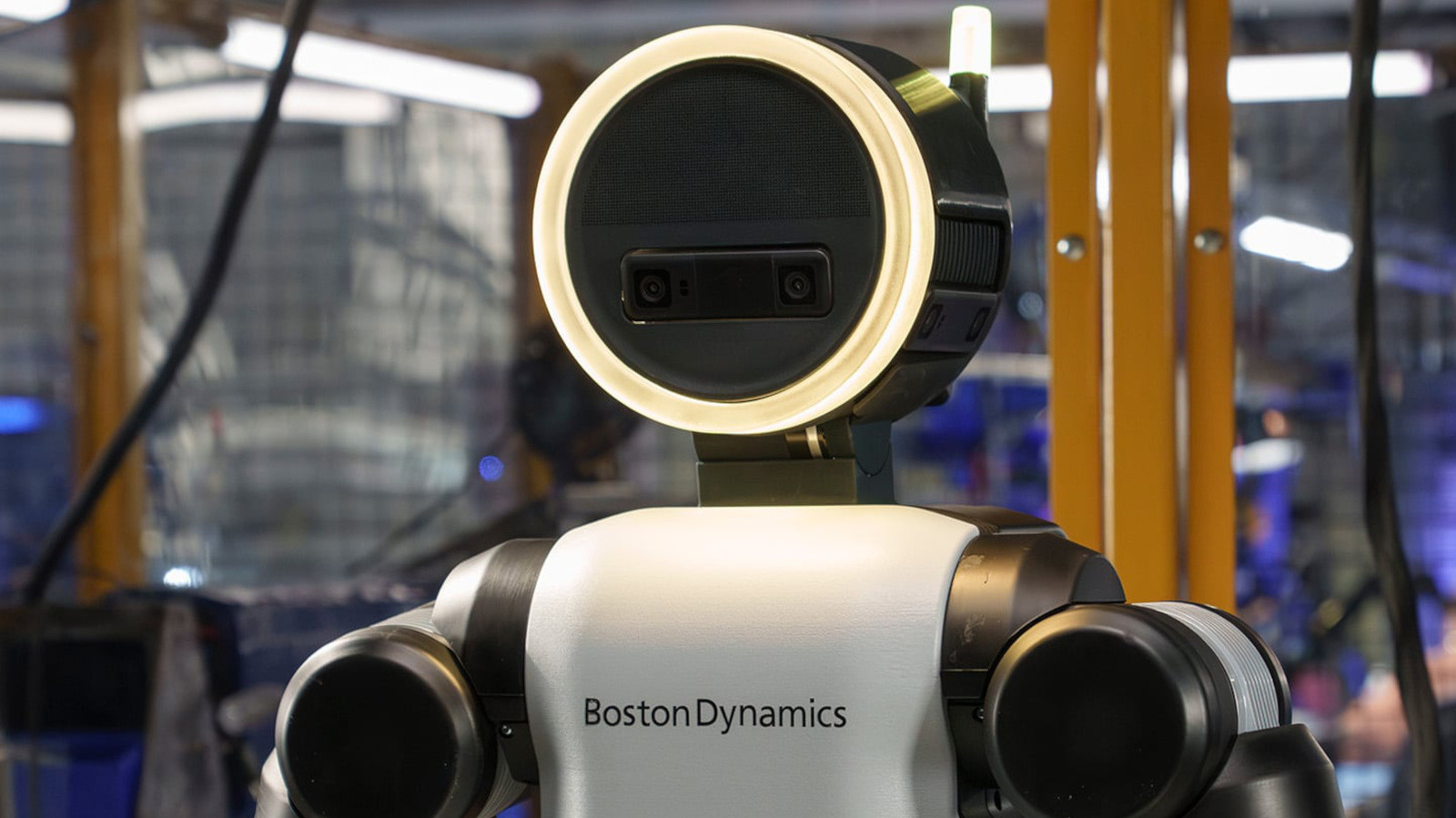
Hyundai reportedly looking to take total control of robotics giant Boston Dynamics
Engadget

Philippine Daily Inquirer
TechnologyJul 16, 2026 · 1 min
Phivolcs: Mayon Volcano spews fresh lava, ash on 192nd day of unrest
Philippine Daily Inquirer

Philippine Daily Inquirer
TechnologyJul 16, 2026 · 1 min
Firm closed over illegal recruitment; applicants pay up to P350K
Philippine Daily Inquirer

AllAfrica
TechnologyJul 16, 2026 · 1 min
Ghana: Three Granted Bail Over Disruption of NPP Constituency Election in Obuasi
AllAfrica