
Hacker Noon
Logic Explained Networks and Tsetlin Machines: the future of (X)AI?
What if AI were fully explainable? What if black-box models could be interpreted in their reasoning? What if we replaced the hefty numerical computations with propositional logic? Over the last decade, academics and tech startups have attempted to answer these questions, introducing the concepts of Logic Explained Networks and Tsetlin Machines. Caught between promising benefits and lack of funding, these solutions may be a game changer for the future of Explainable AI. Logic Explained Networks Logic Explained Networks are a family of interpretable models purporting to bridge the gap between “black-box” neural networks and human-understandable reasoning. The origins In August 2021, a group of researchers from the Italian Universities of Florence and Siena, the French University of Côte d’Azur and the University of Cambridge published a paper titled Logic Explained Networks . Highlighting the intrinsic limitation of neural networks – i.e., providing human-understandable rationales for the model’s decisions - they proposed an alternative called Logic Explained Networks (“LENs”), presenting it as a “general approach to Explainable Artificial Intelligence in the case of neural architectures”. LENs are models based on the concept of First-Order Logic (FOL), an advanced form of logic that extends Boolean logic by introducing additional operators and the ability to represent relationships between entities. FOL’s central concepts include logic predicates, connectives and quantifiers. Think of it in terms of syllogisms: if A is B and B is C, then A is C. LENs promised to fundamentally flip the nature of AI as we know it. While deep learning systems operate primarily as inferential models, generating outputs whose underlying reasoning is often difficult to explain, FOL-based LENs were designed to be deterministic, providing clear and intuitive explanations for their outputs. Parsimony and pruning The 2021 paper recognised the usefulness of so-called parsimony criteria – that is, techniques familiar in deep learning, such as Bayesian priors, weight regularisation (L1) – for LENs. Such approaches would help identify the most logical explanations for certain outputs by simplifying them, for instance by discarding or giving negligible weight to some input concepts. The influence of such techniques would result in the learning process converging to local minima. Once converged in the optimisation space, the process can then be “sped up and [finalised] by pruning the neural network”, meaning “removing connections whose likelihood of carrying important information is low”. A lot of care has to be exercised on what pruning strategy to adopt, because it will greatly influence the quality of the explanations. In particular, researchers proposed three pruning strategies: Node-level pruning : considering each node independently, this technique removes one weight with the smallest absolute value at a time. Network-level pruning : instead of reducing a large quantity of nodes (which would cause a reduction in the learning capacity too), this technique constrains the availability of input concepts in order to limit the number of concepts involved in FOL explanations. Example-level pruning : this technique prunes all those nodes that did not contribute to a specific decision, leaving only the active reasoning path. Initial evaluation The initial experiments indicated a superior performance in classification tasks compared to white-box models while yielding meaningful explanations. Experiments were carried out on six datasets used to conduct several predictions, ranging inter alia from patient data to political preferences, which were tested against six key metrics: model accuracy, explanation accuracy, complexity of explanations, fidelity of an explanation, rule extraction time, consistency of an explanation. Under most metrics, LENs appeared to generalise better than decision trees and Bayesian Rule Lists (BRL). The paper was later peer reviewed and published in the Artificial Intelligence Journal in January 2023 . The Tsetlin Machines Back in April 2018, Norwegian academic Ole-Christoffer Granmo first introduced the Tsetlin Machines (TMs), an algorithm based on propositional logic that promised to solve “complex pattern recognition problems”. Tsetlin Automata TMs are grounded in the so-called Tsetlin Automata, that is, machine learning algorithms based on reinforcement learning principles. First introduced in the 1960s by Soviet mathematician Michael Lvovitch Tsetlin (1924-1966), a pioneer in the fields of automata theory and cybernetics, Automata represent one of the simplest forms of reinforcement learning and a key approach to solve the multi-armed bandit problem . In fact, Tsetlin Automata implement a simple reinforcement-learning mechanism. Think of an Automaton as a simple agent: it has a set of possible actions, internal states and feedback from the environment. The agent does not know the rules: it proceeds by trial and error, receiving feedback from the environment – either a reward, which will confirm current behaviour, or a penalty, which will penalise it instead. The agent will “incorporate” the feedback and adjust its actions to maximise rewards and minimise penalties. Granmo’s game-theoretic framework Granmo extended this concept by creating an “army” of Automata competing to build logical rules collectively, using a game-theoretic framework analysed through Nash equilibria. In Granmo’s framework, TMs treat learning as a game between many small decision-making agents (the Automata) cooperating to discover the best logical representation of a problem. In this game, each automaton controls one literal , that is a certain feature or its negation (Age = 38; NOT Age = 38). As such, it plays a role in deciding whether to include or exclude a certain feature. The objective of the game is to find the combination of excluded and included features that will maximise classification accuracy. After many iterations of rewards and penalties, collective behaviour emerges: good combinations become stronger, bad combinations are discarded, logical rules appear. Nash equilibria A central feature of this decentralised learning scheme is the use of Nash equilibria. In game theory, Nash equilibrium is reached in a stable state, in which no player can improve their outcome by changing their strategy unilaterally. Applied to the TMs framework, this corresponds to a state where Automata have selected their literal and changing one agent’s selection would not affect overall accuracy: the collective solution then becomes stable. Granmo’s original analysis identified conditions under which equilibria of the formulated TM game align with optimal propositional formulas. TMs’ benefits By running multiple tests, Granmo identified several benefits of TMs: Solving the vanishing signal-to-noise ratio problem . Previous tests saw individual Automata’s signals becoming too weak and noisy while the system grew. TMs overcame these limitations by enabling a high number of small-scale learning agents to work together effectively. Efficiency . Through a “decentralized feedback orchestration mechanism”, TMs were found to be able to identify significant data patterns while making efficient use of computational resources and learning capacity. Nash equilibria . As opposed to deep learning models, which can fall into the trap of local optima at the training phase, in Granmo’s framework TMs’ equilibria align with optimal propositional formulas. This allows Tsetlin Automata to accurately converge towards “complex propositional formulas that capture the essence of [complex] pattern recognition problems”. Problem-solving capability . By combining many propositional rules, it was demonstrated that, under five selected benchmarks, TMs could solve highly complex problems competitively with other machine learning algorithms. Interestingly, compared to neural networks, TMs could learn effectively from relatively smaller datasets, even outperforming the Naive Bayes Classifier in data sparse environments. Good fit for computers . Because propositional logic uses Boolean operators such as AND, OR, or NOT, it can be expressed in terms of bits (0, 1). As a result, TMs naturally map onto digital computers, bringing non-trivial benefits such as computational and energy efficiency. For all these reasons, Granmo believed that TMs provided a whole new way of thinking about machine learning algorithms. In fact, TMs represented a novel game theoretic framework “for recasting the problem of pattern recognition”, providing opportunities for introducing “bandit algorithms into large-scale pattern recognition”. TMs vs Neural Networks The fundamental difference in nature between TMs and conventional neural networks will probably be clear by now. Neural networks optimise millions (when not billions) of numerical parameters and rely on gradient descent to converge to local solutions; TMs use interacting agents, searching for logical structure and theoretically converging towards stable equilibria. The former adjusts parameters until the error decreases; the latter’s optimisation occurs through agents negotiating the best explanation (i.e., coordinating the construction of logical clauses). The former predicts outputs accurately, but explaining each prediction can be very hard and requires post-hoc techniques such as SHAP, LIME, feature importance, and so on. TMs instead improve predictions through feedback until every agent has a stable role, which makes explanation a lot easier: explanations are an intrinsic part of the model itself. LENs and TMs Granmo’s TMs predate LENs by approximately three years (2018 vs 2021). However, the two approaches emerged from different research traditions and should be viewed as parallel, rather than chronologically sequential, developments in Explainable AI. Progress made with LENs and TMs The disadvantage suffered by logic-based architectures does not mean that these models haven’t been developed at all. Albeit more niche in industry, commercial and academic applications have been indeed developed. Literal Labs UK-based tech startup Literal Labs emerged from a research project at Newcastle University and was formed in 2023. To date, it appears to be the major commercial proponent of logic-based AI. The company introduced Logic Based Networks (LBNs) and developed ModelMill, a platform to train, test and develop LBNs. On its website, Literal Labs claims LBNs provide various benefits, comprising: Similar of accuracy to that of neural networks Fully explainable and interpretable outputs LBNs can run on MCUs and CPUs, therefore with no need for GPUs Deterministic and hallucination-free outputs 50x faster inference and 50x less energy per output Battery powered, IoT device compatible Interestingly, Literal Labs’ website describes TMs as the “learning engine at the heart of Logic Based Networks”. The same website explains that the company’s founders Alex Yakovlev and Rishad Shafik extended the capabilities of TMs combining numerous data representation techniques such as booleanisation, binarisation, parallelisation and compression methods. Literal Labs’ product is profoundly rooted in the TMs work of the above-mentioned Ole-Christoffer Granmo, who in fact holds a role as chair of the company’s technical steering committee. Edge AI and ultra-low-power AI As previously mentioned, LENs and TMs can be well-suited for Edge AI because they need lower computational power, storage memory footprint and energy, and can run on MCUs and CPUs. In February 2026, a group of researchers from the Indian Institute of Technology Guwahati (IITG), the US’ Carnegie Mellon University and the Dutch University of Groningen published a comprehensive review of existing trends and implementations of TMs in edge computing, sensors, on-device learning and IoT. The paper was later published in the IEEE Internet of Things Journal . Associative Processor (AP) On 19 June 2026, another group of researchers published a paper introducing the concept of Associative Processor (AP) TMs, that is a way of running TMs on a special hardware called AP. Whilst conventional AI models move data back and forth between memory (where data is stored) and processors (where data is computed) – a process that consumes high volumes of time and energy – AP performs computations directly inside the memory itself (the so-called “processing in memory” or PiM). Researchers reported that the system could train TMs, make predictions and update clauses with favourable scaling under their AP architecture. Their experiment suggested that TMs could run efficiently on specialised memory hardware, which may lead to AI that is impressively faster, more energy efficient and again suitable for edge devices and embedded systems. Other applications LENs and TMs applications were also developed or reviewed in the following fields: Natural Language Understanding . In 2022, Granmo, his colleague Morten Goodwin and other researchers published a paper detailing the results of a TMs application to natural language understanding, leveraging the Herbrand semantics . Authors reported a 10× more compact knowledge base, higher question-answering accuracy (from 94.83% to 99.48% in its closed-domain experiment), and significant robustness to noisy information. Text classification . In 2022, acknowledging that LENs’ key weakness was to provide noisy local explanations, six researchers from UK, French and Italian universities proposed LEN p , a new LENs model specifically designed to address this limitation by perturbing input words and testing in on text classification. According to researchers, the model proved better than LIME in providing local explanations within the evaluated text-classification setting. Graph Reasoning . In 2024-2025, Granmo and other researchers extended TMs to the domain of graph reasoning, as part of a project that is currently available on GitHub . Cybersecurity . In 2024, seven researchers from various Italian and Slovakian universities tested the application of LENs to malware detection. The results were very positive, with the LENs application being competitive with black-box baselines in the reported experiments. So why aren’t LENs and TMs everywhere? Based on the above, one would naturally wonder: if LENs and TMs can provide neat explanations (and such explanations are even part of the model design itself), are environmentally friendly and potentially regulatorily robust, why aren’t they everywhere? Why haven’t they been developed to an extent at least similar to that of deep learning models? There may be a few reasons. Higher performance Compared to LENs, neural networks are highly superior at identifying patterns in unstructured data. Modern AI is largely about LLMs and multi-modal models, which excel at spotting latent representations and solving problems hidden in vast amounts of data. The ability of pre-trained transformers to learn abstract representations (i.e., the concept of irony, context, cultural references) cannot be compared to that of logic-based architectures. Need for flexibility Any AI development faces trade-offs. In neural networks, performance is directly proportional to complexity, but too much complexity makes outputs hard to explain. With LENs, the more articulated the structure, the easier its explainability, but adding too many constraints might make the model not as flexible, expressive and creative. And therefore, less desirable by users. Marketability Let us not forget that who is developing AI models are companies needing to drive revenues and respond to shareholders. This means that they will inevitably look at model designs that better respond to, or shape, market demands. Neural networks have been largely favoured because of their computational capabilities, which translated into quicker and more promising economic opportunities. The whole AI discourse (or most of it) revolves around deep learning, GPUs, transformers, large datasets. For the same reasons, LENs and TMs have remained behind in the AI race, with less interest, fewer papers, fewer architectures and, by far, less funding. Benchmarking disadvantage Current benchmarks such as MMLU and HumanEval favour architectures emphasising accuracy and generalisation, and do not measure explainability or interpretability. This alone does not explain the funding gap, but it creates a perverse and nonsensical incentive: LENs may be disadvantaged just because they perform well in real-world regulated applications but not as well in leaderboards! Why LENs and TMs (will) matter In providing deterministic outputs and being explainable by design, it is desirable that LENs and TMs will succeed in the near-term future in various areas. Regulated decision systems Explainability will hardly be optional for AI systems responsible for high-risk decisions, particularly in regulated sectors, such as financial services (credit scoring) and healthcare (medical diagnostics). AI uses that may create or amplify discrimination, such as recruitment and CV screening, are also extremely exposed to regulatory scrutiny. Relying on explainable-by-design AI models may become desirable for companies willing to gain regulatory assurances and avoid hefty fines or reputational impacts. Agentic AI The high degree of autonomy of Agentic AI systems carries intrinsic risks of justifying agents’ decisions. Future agents will increasingly require advanced planning, reasoning, memory, safety constraints, accurate semantic layers, precise context. But however technologically advanced agents are, things may still go south until they rely on inferential systems. A pure LLM agent will remain difficult to audit. Again, agentic propositional logic may be a game changer, especially from a regulatorily standpoint. Getting back to the harsh reality Out of the reasons why LENs and TMs haven’t been this successful so far, I would argue that their marketability is probably the most important. Companies want to sell AI, not constrain it. As of today, Big Tech would ostensibly not favour the development of AI models constrained by architectures that limit their full capabilities. In fact, commercial incentives favour high-performing and broadly deployable systems instead, rather than architectures optimised primarily for interpretability. Though you never know: major technology firms have often seen regulations with suspicions, but when public perception shifted, their stance (slightly) shifted too. See Anthropic’s recent open calls for AI regulation and its warning against overly powerful models , or OpenAI urging global rules on AI , earlier this year. A day may come when ethics will play a role in commercial decisions, when investment flows into developing fully explainable AI systems, and when LENs and TMs are developed at greater scale to allow users to trust AI. Alas, this is not the day.
View original source — Hacker Noon ↗
Related stories
Engadget
TechnologyJul 16, 2026 · 1 min
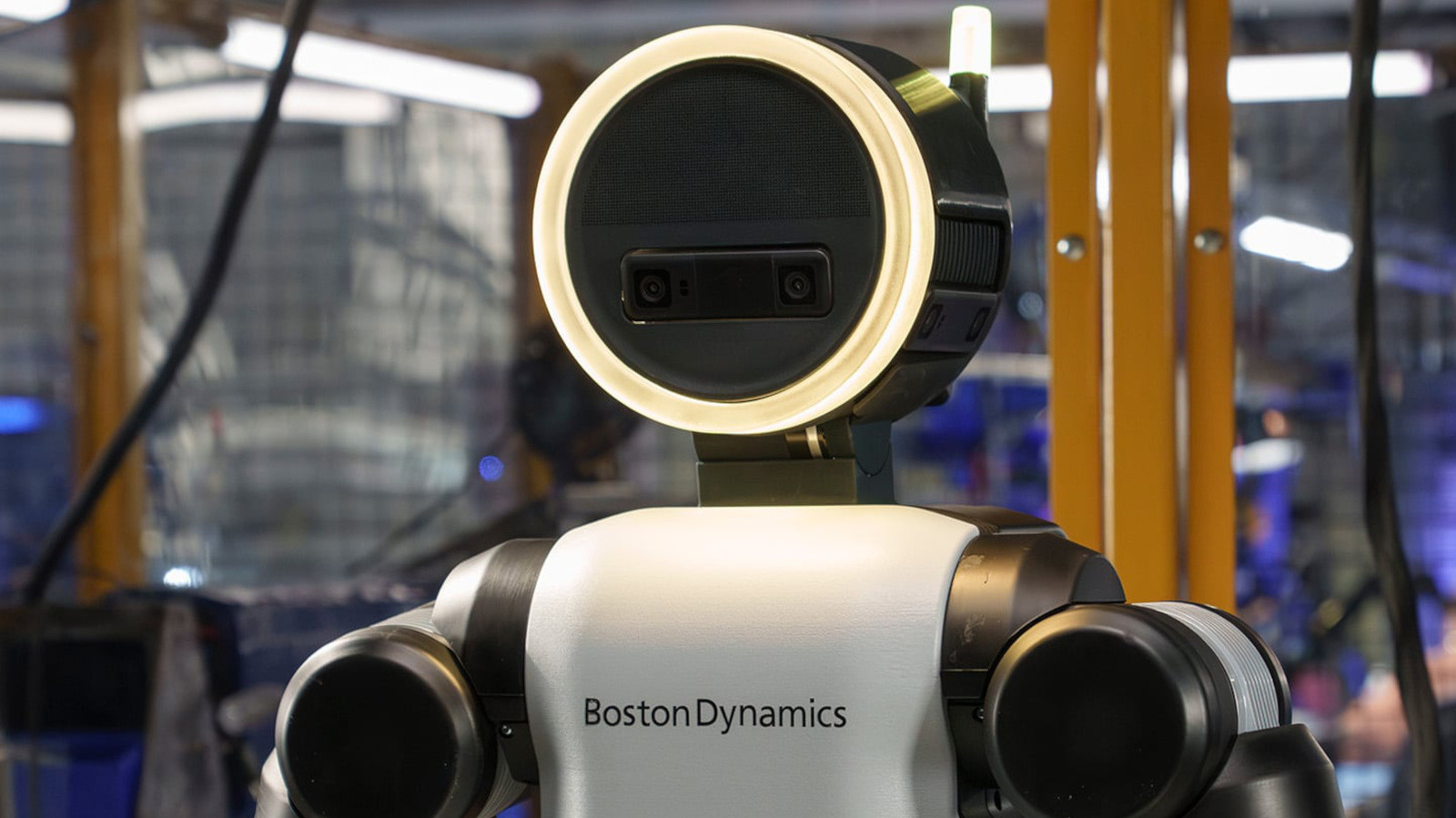
Hyundai reportedly looking to take total control of robotics giant Boston Dynamics
Engadget

Philippine Daily Inquirer
TechnologyJul 16, 2026 · 1 min
Phivolcs: Mayon Volcano spews fresh lava, ash on 192nd day of unrest
Philippine Daily Inquirer

Philippine Daily Inquirer
TechnologyJul 16, 2026 · 1 min
Firm closed over illegal recruitment; applicants pay up to P350K
Philippine Daily Inquirer

AllAfrica
TechnologyJul 16, 2026 · 1 min
Ghana: Three Granted Bail Over Disruption of NPP Constituency Election in Obuasi
AllAfrica