
Hacker Noon
What a Payment Protocol Bug Taught Me About Reconciliation at Scale
A few months ago, I was staring at a transaction that hadn’t actually failed. I was contributing to x402, a payment protocol, when I ran into a specific and irritating failure mode. A facilitator, the service responsible for confirming a payment went through, would time out. The client would see a timeout and flag the transaction as failed. But the chain itself often told a different story. Given enough time, the transaction confirmed, affirming that two systems recording the same event disagree about the truth. The disagreement arises whenever a fast-responding system is asked to describe the state of a slow-responding system. The fast system times out and reports failure while the slow system eventually settles and reports success. If nothing reconciles the two, you are left with a client convinced money is stuck, and a chain convinced the payment is done. I built a small tool called x402-recovery to fix it. x402-recovery does not trust the facilitator’s timeout as the final word; instead, it polls the chain directly, tracks the transaction via a state machine, and resolves the outcome once the chain has a definitive answer. It was a narrow fix, but it taught me something that would later compound into what I am building now. The pattern underneath the fix Around the same time, I was writing a series on programmable payments infrastructure. Publishing that series turned into an unplanned research project of its own. People kept reaching out with a version of the same story: a payment that looked fine on one side and broken on the other. They could not explain the reconciliation break that led treasury teams to spend a lot of time manually comparing two ledgers that were supposed to match automatically. Once you notice the pattern, you can’t unsee it. A bank's core ledger and a card network settlement file. A DeFi protocol's internal accounting and the on-chain log for the same pool. A facilitator’s timeout and a blockchain’s actual event confirmation. Different rails, different actors, same underlying shape: two systems recording the same financial event, with no automated way to determine which record is authoritative when they disagree. x402-recovery solved that shape of problem for one specific use case. However, I was also gathering feedback on my series from different angles: Banks, PSPs (Payment Service Providers), and DeFi treasury managers, and the conclusion was that nobody has solved the problem in general. Everyone maintains their own fragile version of reconciliation, usually a script one engineer wrote that nobody else fully understands, with no audit trail and no way to explain a decision to an auditor beyond “the script did it.” That is the problem I am now building infrastructure for, under the name Run-Fi . Instead of reconciling one protocol’s timeout against its chain, it reconciles any transaction source - a SWIFT wire, a card settlement file, an EVM transfer - against any other, using deterministic rules where the answer is clear and AI-assisted fuzzy matching where it is not, with a full audit trail behind every decision. Why the compute layer had to be decentralized The fuzzy-matching side of the pipeline needs GPU inference, first for generating transaction embeddings and soon for LLM-assisted resolution reasoning for genuine exceptions. Where that inference runs is an architectural decision that determines whether the business works at all. Two things drove this decision: Trust and unit economics. Financial transaction data is sensitive by definition, and a compliance officer evaluating a reconciliation vendor will ask, early and directly, where that data goes. Routing it through a centralized cloud AI API means handing it to infrastructure whose job definition you do not control. That is often enough to end a procurement conversation before pricing is discussed. For unit economics, clients buy certainty, not time. The entire commercial premise here is that automated reconciliation costs less than the existing reconciliation framework. That only holds if the cost per matched transaction stays low at real volume, and centralized cloud AI pricing does not scale once inference runs continuously across thousands of transactions a day. Spot GPU pricing on a decentralized network does. I run this on Nosana . Jobs are dispatched via Nosana's REST API to a node running the target Docker image, which supports embedding generation and, soon, LLM inference. Results are retrieved via polling rather than a webhook, and a fallback router reroutes to local inference if a job times out, so the compute layer degrades gracefully instead of blocking the whole pipeline. That resilience detail matters commercially because no customer adopts reconciliation with a single point of failure beneath it. None of these demonstrates loyalty to decentralized compute. I see it as a trust requirement and a cost requirement, both addressed independently by Nosana. What’s next? Run-Fi’s embedding side is live and tested. The next workload going onto the same inference container is LLM-assisted resolution: taking an unmatched transaction plus its top candidate matches and producing a plain-language explanation of which one is correct and why, the kind of reasoning a compliance officer or someone from finance will need before they will trust to act on an automated suggestion. There is a reasonable argument that reconciliation is a boring problem. It does not have the immediate appeal of a trading algorithm or a new settlement rail. But boring, mandatory, and expensive is exactly the kind of problem worth automating properly, and it turns out the same lesson from a small protocol fix scales cleanly to a much bigger version of the same question: when two systems disagree about what happened, how do you decide, automatically and defensibly, which one is right? That is the question I keep building an answer to. This post is part of the DecentralizeAI Hackathon — made possible by Nosana (decentralized GPU compute), Arweave (permanent decentralized storage), MEXC (crypto exchange), and HackerNoon . Discuss on HackerNoon with #DecentralizeAI.
View original source — Hacker Noon ↗
Related stories
Engadget
TechnologyJul 16, 2026 · 1 min
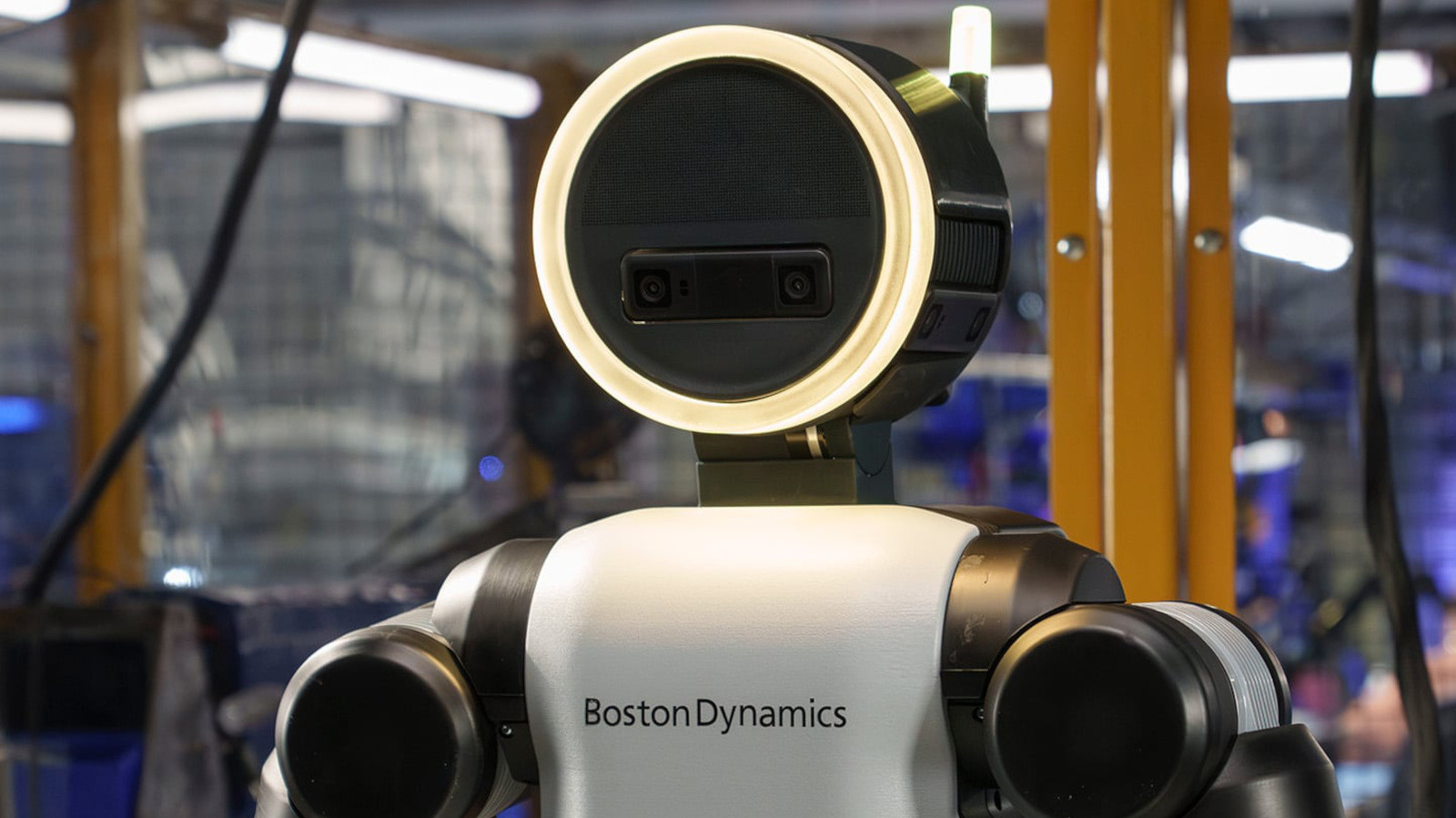
Hyundai reportedly looking to take total control of robotics giant Boston Dynamics
Engadget

Philippine Daily Inquirer
TechnologyJul 16, 2026 · 1 min
Phivolcs: Mayon Volcano spews fresh lava, ash on 192nd day of unrest
Philippine Daily Inquirer

Philippine Daily Inquirer
TechnologyJul 16, 2026 · 1 min
Firm closed over illegal recruitment; applicants pay up to P350K
Philippine Daily Inquirer

AllAfrica
TechnologyJul 16, 2026 · 1 min
Ghana: Three Granted Bail Over Disruption of NPP Constituency Election in Obuasi
AllAfrica