
Hacker Noon
Aina Raises $5.5M Led by Redstart Labs and 360 ONE to Build the Interface for the Age of AI
Every day, the average smartphone owner performs several hundred small digital tasks, and pays a toll on every single one. It is not a fee. It does not appear on any bill. It is collected in four-tap increments: unlock the phone, find the app, wait for it to load, type the thing the phone already knows you were going to type, confirm the thing you confirm every day. Booking the same cab to the same office. Joining the meeting that has been in the calendar for a week. Ordering the lunch you order every Thursday. Each toll is seconds. Multiplied across hundreds of tasks and a working day, it compounds into the largest unbilled expense in consumer technology: cognitive load, extracted by interfaces designed for the way people operated in 2007. Aina believes that toll booth is the last great unclaimed territory in consumer hardware. The San Francisco and Bangalore company announced this morning a $5.5 million seed round, led by Redstart Labs, the early-stage vehicle of India's Info Edge, and 360 ONE Asset, with participation from MIXI Global Investments, Antler and Blume Founders Fund, and a bench of angels that reads like a map of Indian consumer distribution: Kunal Shah of CRED, Harshil Mathur and Shashank Kumar of Razorpay, Tikhon Bernstam of Scribd, and Vaibhav Domkundwar of Better Capital. The funding will bring Aina's flagship interface, built in stealth under the codename Project Mirage, to market, and today the company opens the waitlist for its pilot. The pitch is unusual for an AI hardware company in 2026, because it contains no assistant at all. Aina does not claim to build a smarter chatbot, a better voice companion, or a wearable second brain. It claims something narrower and stranger: that as AI agents learn to anticipate and execute, the only work left for the human is the choice itself, the yes or the no, and that nobody has built the physical instrument for making that choice effortlessly. Software is racing ahead. The hardware layer where human intent enters the machine has not moved in decades. Aina is building for the gap. The Most Expensive Gap in Consumer Technology The numbers behind Aina's thesis are hiding in plain sight, in the shape of every interface transition in computing history. The keyboard we type on descends from an 1868 typewriter patent and was last meaningfully updated in the 1980s. The touchscreen grammar we live inside, the grid of apps, the tap-browse-confirm loop, was designed in 2007 for a world where software could not know what you wanted, so the interface put everything in front of you and made you find it. That was the correct design for its constraint. The constraint is gone. A single prompt can now generate a film. AI notetakers transcribe, summarise and file an entire meeting without being asked. And yet joining that meeting still takes four clicks through windows nobody wanted, because the intelligence lives in the software while the interaction still lives in 2007. This gap, between what AI can do and what the hardware lets people reach, is Aina's founding diagnosis for why AI adoption keeps disappointing its own hype cycle: people are perpetually excited about what AI could change and perpetually overwhelmed by the interfaces through which they are asked to use it. The historical pattern is the investment memo. Every generation of computing produced a new interface, and every interface that won, won by asking less of the person using it. The punch card demanded trained operators. The command line demanded memorised syntax. The GUI asked you only to recognise and click. The touchscreen asked you only to tap. Each transition transferred work from the human to the machine, and each one minted the most valuable companies of its era. Aina's bet, stated plainly in its launch material, is that the next interface asks least of all: in a world where AI has context on everything you are doing, the only thing left for humans is to choose. The Graveyard This Company Is Choosing to Build In Honest analysis requires saying the quiet part first: AI hardware is where venture capital went to die between 2023 and 2025, and any seed round in this category must be read against the body count. Humane, founded by two of Apple's most celebrated designers, raised more than $230 million, spent five years in stealth, launched a $699 pin with a $24 monthly subscription, and sold its remains to HP for $116 million in February 2025, bricking every device in customers' hands at noon Pacific on February 28. Rabbit sold 100,000 R1 units on launch hype and, per The Verge's reporting , retained roughly 5,000 daily active users within months, a 95 per cent abandonment rate its own CEO only partially disputed. The Friend pendant sold about 3,000 units into a $1 million New York subway campaign that commuters defaced. One industry tally put the failure rate of AI hardware startups at 85 per cent in 2025 . And yet the category refuses to close, because the single largest hardware bet in the world says the thesis is right even if every execution so far has been wrong. OpenAI paid $6.5 billion in stock for Jony Ive's io in May 2025, and is now, per court filings, targeting shipment no earlier than early 2027 for a screenless, context-aware device built on the identical premise Aina states in its release: that the interface, not the intelligence, is the bottleneck. Amazon quietly bought the Bee pendant. Meta's Ray-Ban glasses became the one undisputed consumer win of the category. The graveyard and the gold rush are the same field. So the correct question about Aina is not whether the thesis is credible. A $6.5 billion acquisition already answered that. The question is why a 35-person team with $5.5 million should survive terrain that killed teams with forty times the capital, and the answer is in what the dead companies had in common. Look at the failures structurally and the pattern is uniform. Every one of them tried to replace the smartphone with a worse smartphone. The AI Pin asked its owner to give up a bright, instant, universal screen for a laser projection that washed out in daylight. The R1 asked for a second device that did less than the free ChatGPT app on the phone already in the other pocket. The bar for standalone AI hardware, as the post-mortems all concluded, is not better than nothing, it is better than a phone , and nothing cleared it. Worse, every one of them shipped as a finished consumer vision, built in stealth on a founder's conviction, and met its first real user after the capital was spent. Aina's architecture, and its go-to-market, invert both mistakes, which is the actual story of this round. Founder-Market Fit, Measured in Rings Shipped If any founder has earned the right to attempt consumer hardware from India for the world, it is, plausibly, this one. Apoorv Shankar was VP of Hardware at Ultrahuman, the Bengaluru company whose Ring Air took on Oura, the category-defining Finnish incumbent, from a standing start. The results are in the filings: Ultrahuman's revenue grew from ₹105 crore in FY24 to ₹565 crore in FY25 , a 5.4x jump, swinging from a ₹38 crore loss to a ₹72 crore profit, with the smart ring contributing ₹516 crore of that revenue and 61 per cent of sales coming from the United States. Over 15x revenue growth across FY22 to FY24, then 5x again, then profitability, in a hardware category where growth is almost always subsidised by losses. The relevance is narrow and specific. It is not that rings and keypads are the same product. It is that Shankar has already lived the exact operational gauntlet that killed Humane: designing precision consumer hardware, standing up manufacturing, surviving the unit-economics math, and shipping globally from India at a company that reached scale profitably. The 360 ONE investment note says this in investor language, that the team has shown it can design and manufacture revolutionary consumer hardware from India for the world. Ultrahuman is the proof text, and it is a proof text almost no AI hardware founder of the 2023 vintage possessed: the failures were led by brilliant software and design people learning hardware on the investors' money. The second half of the founder-market fit is methodological, and it is the sharpest contrast with the graveyard. Aina incorporated in May 2025 and spent its first year not building a moonshot in stealth but operating as a human-computer interaction lab under the name Project Mirage. It showed three experimental interfaces at CES 2026, each targeting a daily-life workflow: online meetings, booking cabs, ordering food. From those experiments it shipped Dune in April, a three-key context-aware keypad for Mac that reads whichever application is in the foreground and adapts its keys to match, and put hundreds of units into the hands of power users, harvesting live workflow data on how real people actually adopt AI. Only then, with a shipped product, public experiments and a validated thesis, did it raise. Fourteen months, three public experiments, one shipped product, then $5.5 million. Humane's sequence, inverted. In a category whose defining failure mode was conviction outrunning contact with users, the sequencing is not a detail. It is the strategy. A Keypad Today, a Choice Instrument Tomorrow What Aina has shown publicly is Dune: three physical keys that change meaning with context. In a video call, they might be mute, camera, leave. In a browser, something else. The device already knows what you are doing, so the keys never need to be found, configured, or remembered. Power users will recognise the lineage: Elgato's Stream Deck built a beloved niche business on programmable macro keys, and Dune's difference is that nobody programs it. The context does. What Aina is building in stealth, and what this round funds, is the general-purpose version of that idea, and the launch language is unusually precise about the interaction model it is designed for. Shankar's framing runs like this: phones and computers are designed for browsing, you think of the task, you navigate, you input, you confirm, and you spend the same effort on the thousandth repetition as the first. As intelligence gets commoditised, assistants will understand context and agents will execute, and the human's remaining role collapses to receiving proposals and saying yes or no. The missing piece is the context-aware layer paired with an easier way to capture human choice. Aina is building, in the company's own words, a general-purpose interface designed to capture human approval, effortlessly. Read that sentence next to the category's failures and the design choice snaps into focus. Every dead device made voice the primary input, and voice is a high-friction instrument for low-stakes decisions: slow, public, error-prone, socially awkward in an office and useless in a loud street. But an approval is the lowest-bandwidth signal in computing, a single bit, and the most natural instrument humans have ever had for a single bit is a physical control under a finger. A key press is instant, private, silent, and certain. Aina's wager is that in the agentic era the scarce interaction is not conversation, it is consent, and consent wants to be tactile. That wager also dictates the device's relationship to the phone, which is where the graveyard analysis pays off. Nothing in Aina's public material proposes replacing the smartphone. Dune sits beside a Mac. The interface in stealth is described as spanning everyday tasks on our phones and computers, a layer across existing devices rather than a rival to them. The one consumer success in this category, Meta's glasses, and the one $6.5 billion bet, OpenAI's device, both settled on the same posture: complement, don't compete. Aina arrives there at seed price. The Two TAMs? Understanding the Addressable Market Here is where the analysis gets interesting, because Aina's market can be sized two completely different ways, and the gap between them is the whole investment story. Sized conventionally, Aina sells a desk accessory. The global market for mechanical and specialty keyboards is on the order of $2 billion, inside a computer peripherals market of roughly $110 billion, both respectable and both fully colonised by Logitech, Elgato, Razer and a hundred Shenzhen brands with faster supply chains than any startup. If Aina is a keypad company, it is competing for shelf space in a niche, and $5.5 million is a rounding error against the incumbents' marketing budgets. But that is not the market Aina is claiming, and the release is explicit about it. A general-purpose interface is not an accessory; it is a claim on the layer where human intent enters computing, and the history of that layer is the history of the most valuable franchises in technology. The company that owned the GUI era's interface conventions became Microsoft. The company that owned the touchscreen became Apple, whose iPhone built the most profitable product line in business history on the back of an interaction model. The smartphone industry it anchors clears roughly half a trillion dollars a year, and it exists because 2007's interface asked less than 1984's. There is precedent for entering that layer through a humble wedge, and it is the most instructive comparable available. The mouse was a $15 accessory that looked like a peripheral and turned out to be the Trojan horse for the entire GUI era; the companies that understood it was an interface claim, not an accessory, captured the platform. Dune is Aina's mouse: a small, shippable, immediately useful object that trains both the company and its users in a new interaction grammar, while the general-purpose claim waits in stealth. The keypad is not the product. The keypad is the wedge into the approval layer, and if agents genuinely become the way tasks get done, whoever owns the instrument of approval sits in the flow of every task on earth. The honest caveat is that the second TAM only exists if the agentic future arrives on schedule. Aina is not betting that AI improves; it is betting on a specific interaction pattern, proposal and approval, becoming the dominant grammar of daily computing. If agents plateau at novelty, an approval device is a remote control for a world that never shipped. That is the risk the round prices, and at $5.5 million it is priced honestly, which is more than the category's earlier entrants can say. The Investor Thesis: Why This Syndicate, Why Now The cap table is quieter than an a16z-led hardware round, and, as with everything else about this company, the quietness is the information. Redstart Labs is the early-stage vehicle of Info Edge, which is the closest thing Indian technology has to a patient-capital institution: the first institutional backer of Zomato and Policybazaar, famous for holding through a decade to two of the largest venture outcomes in the country's history. Vibhore Sharma's stated reasoning, that AI is dissolving the line where you instruct and computers execute, and that new categories are born where the interface disappears, is a thesis statement about the layer, not the gadget. Info Edge money does not chase consumer hardware hype; it has never needed to chase anything. 360 ONE Asset is the venture arm of India's largest wealth platform, and Abhishek Nag's memo logic is the historical argument rendered as an investment: every leap in computing has demanded a new hardware interface, from punch cards to the GUI to the smartphone, and the team has shown it can design and manufacture revolutionary consumer hardware from India for the world. That last clause is the tell. This is, among other things, an India-hardware-for-the-world bet, underwritten by people who watched Ultrahuman do exactly that from the same city. MIXI Global Investments brings Japanese consumer DNA, from the company behind Monster Strike, one of the highest-grossing consumer apps ever shipped. And the angel list is a distribution asset disguised as a courtesy paragraph: Kunal Shah built CRED on the insight that reducing friction for repeated financial tasks is a business; the Razorpay founders built the pipes those tasks run on; Better Capital's Domkundwar has seeded much of the Indian SaaS generation. These are people whose companies live inside the exact daily-task loops, payments, confirmations, approvals, that Aina wants to compress. If the stealth interface needs launch partners whose apps millions of Indians confirm things in every day, the partners are on the cap table. What is absent is also legible: no Sand Hill hardware fund, no strategic from Cupertino or Mountain View, no capital that would pressure a 35-person team toward a Humane-scale launch before the interaction model is proven. For a company whose core strategic asset is the discipline of shipping small and learning, the absence of moonshot money is not a weakness of the round. It is the round working as designed. What Has to Go Right Honest analysis requires naming the hard parts, and Aina has three worth naming. The first is the platform-permission problem. A context-aware interface is only as good as the context it can read and the actions it can trigger, and both run through operating systems owned by companies building competing visions. Dune works because macOS exposes what application is in the foreground; the phone half of Aina's ambition runs into iOS, where Apple polices exactly this kind of ambient capability and is shipping its own AI layer. Every interface company that sits on someone else's OS lives at the pleasure of its landlord, and Aina's landlords are the two most territorial in software. The mitigation is that an approval device needs shallower hooks than a full assistant, a proposal in, a bit out, but the risk does not go away; it gets negotiated, release by release. The second is the retention cliff that killed the category. Hundreds of Dune units with enthusiastic power users is a promising lab result and a statistically tiny one, and the gap between power-user delight and mainstream habit is precisely where the R1's 100,000 buyers became 5,000 users. The pilot waitlist opening today is the first real test: not how many sign up, which measures curiosity, but how many are still pressing the keys in month three, which measures whether the approval grammar is a habit or a demo. Aina's method, instrumented hardware in real workflows before scale, is built to answer that question honestly. It has not answered it yet. The third is the giant on the same road. OpenAI's device, whenever it ships, will arrive with 900 million weekly ChatGPT users, Foxconn manufacturing, and a marketing event the entire planet will watch. If it succeeds, it defines the AI interface category's defaults, and a seed-stage company must either fit its ecosystem or fight its gravity. The counter-argument is genuinely strong: the io device has slipped to 2027, is voice-and-ambient by every report, and a tactile approval layer is complementary to a conversational companion rather than competitive with it, in the way a mouse was complementary to a screen. But a category where the deepest pocket in technology is about to set consumer expectations is a category where timing errors are fatal in both directions, and Aina's eighteen-month window to establish its grammar before the defaults land is the real clock on this round. Final Thoughts The most valuable positions in computing have never belonged to the fastest chip or the largest model. They have belonged to whoever owned the moment human intent enters the machine. The keyboard owned it for the terminal era, the mouse for the GUI, the touchscreen for the mobile decade, and each handover minted the defining company of its generation. The agentic era will have such a moment too. Software that anticipates and executes still terminates, every single time, at a human saying yes. If Aina's thesis holds, the prize is not a slice of the keyboard accessory market. It is the position of default instrument for human approval in a world of proposing machines, a claim on the interface layer that history prices in trillions and that this round prices at seed. That gap is the entire venture case, and it explains why India's most patient technology investor and its largest wealth platform wrote into the same $5.5 million round that Silicon Valley's hardware funds never saw. Seed announcements are easy to make and hard to interpret, but this one comes with an unusually clean test, and Aina has already run half of it in public: the company ships, learns and iterates faster than the category's corpses ever allowed themselves to. Either the pilot cohort is still pressing those keys in month three and the approval grammar hardens into habit, or it is not. In a hardware category exhausted by vision videos and bricked devices, that kind of falsifiability might be the most valuable thing this funding announcement actually communicates. Don't forget to like and share the story! Vested Interest Disclosure: HackerNoon has reviewed the report for quality, but the claims herein belong to the author. #DYOR.
View original source — Hacker Noon ↗
Related stories

The Verge
TechnologyJul 16, 2026 · 1 min
New York governor says she’s using AI to analyze ‘every single rule’ in the state
The Verge

The Verge
TechnologyJul 16, 2026 · 1 min
Ecovacs’ self-cleaning Deebot X11 has hit a new low price
The Verge
Buenos Aires Times
TechnologyJul 16, 2026 · 1 min
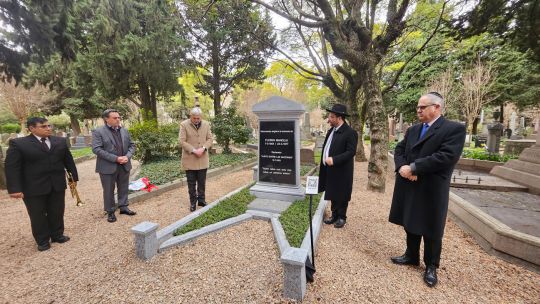
Memorial unveiled for Romanian diplomat who saved Jews from Nazis
Buenos Aires Times
Engadget
TechnologyJul 16, 2026 · 1 min
Sonos brings tab navigation, speaker sorting and more to its app
Engadget