Indian Express
India Semiconductor Mission 2.0: Centre not keen on covering tech transfer, land costs under new chip scheme
5 min readJul 17, 2026 08:22 AM IST
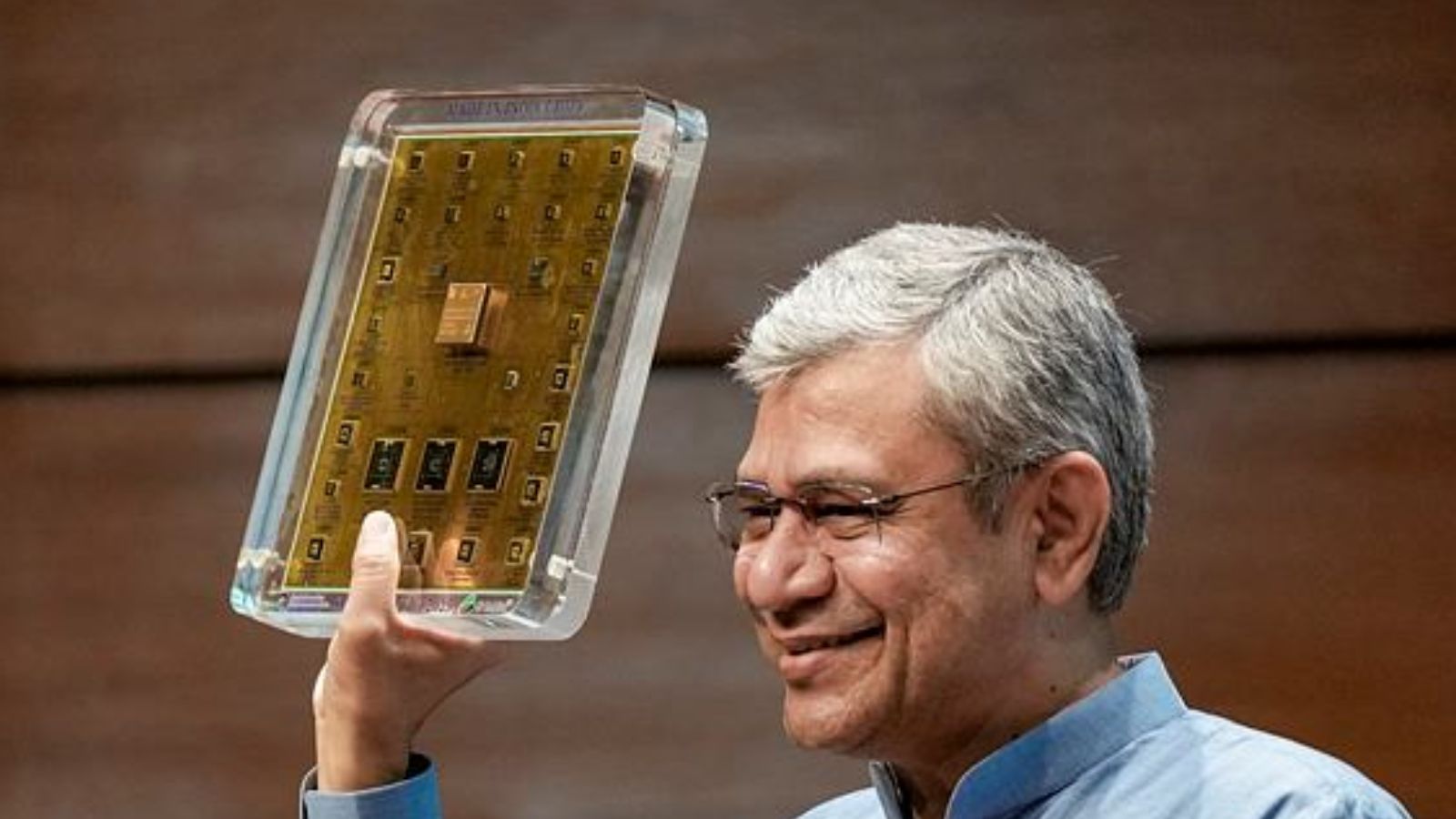
Union Information and Broadcasting Minister Ashwini Vaishnaw showcases 'Made in India' semiconductor chips as he speaks during a cabinet briefing, in New Delhi. (PTI Photo)
Under the next phase of India’s ambitious Rs 1.27 lakh crore Semiconductor Mission, the Centre may not offer subsidies to companies arising out of technology transfer costs, with the prevailing thought being that calculating such expenses is complicated, The Indian Express has learnt.
The Centre may also no longer offer subsidies for land acquisition to set up chip manufacturing plants, as state governments are expected to take the lead on that, a senior government official said.
Under the first iteration of the scheme, there was a provision for the government to cover a portion of technology transfer costs that approved companies may incur, but a senior government official said that it has been removed under India Semiconductor Mission (ISM) 2.0. Even though the provision existed under ISM 1.0, such disbursals were not made, it is understood.
“The reason we have decided to not offer subsidies on technology transfer costs is because when we were evaluating proposals under the first leg of the scheme, there was a realisation that such transfer costs are quite opaque. It is almost impossible to reliably calculate the exact amount, so we have made changes accordingly,” the official said, requesting anonymity.
Tech transfers key for semiconductor manufacturing operations
Technology transfers are an important element in companies setting up semiconductor manufacturing operations in India, because many participants may not have access to such technology in-house. For instance, Tata Electronics, which is setting up a chip fabrication plant in Gujarat, is getting the manufacturing technology from Taiwan’s PSMC.
These reconsiderations also point to the broader theme of India’s shifting priorities under its new chip incentive scheme. The new policy is expected to place greater reliance on subsidising chip design, and the broader ancillary industry.
“In terms of our priorities for the new scheme, first would be chip designing, then bringing the broader supply chain ecosystem to India, and then subsidising building of new chip manufacturing units,” a second official said.
Story continues below this ad
On Wednesday, the Union Cabinet approved ISM 2.0 with an outlay of Rs 1.27 lakh crore. Under the first scheme, India managed to attract 12 chip making plants, including a fabrication facility being set up by the Tata Group.
The country’s foray into semiconductor production and packaging has been outlined as a strategic move by New Delhi to insert itself into the global chip supply chain and establish the sector to deepen domestic value addition in its electronics sector. Semiconductors — used to power devices from toasters to fighter jets — have become a critical resource amid heightened geopolitical tensions over the last few years.
By 2029, India expects to achieve the capability to design and manufacture chips required for nearly 70-75% of domestic applications, and by 2035, the country aims to be among the top semiconductor nations globally.
Design, supply chain take priority under ISM 2.0
Compared to the first iteration of the ISM, government incentives for semiconductor manufacturing plants have been slashed in ISM 2.0. For instance, the first scheme carried a uniform capex subsidy of 50% for fabs and assembly plants. However, under ISM 2.0, silicon fabs will receive a subsidy of 40%, and other fabs will get 35%. Similarly, the incentive for advanced packaging has been kept at 35%, and 25% for conventional packaging.
Story continues below this ad
Under the new scheme, the government will offer grants and may also take equity in large companies and start-ups that design semiconductor chips, which rank higher on strategic and commercial parameters. The government’s investment will depend on whether these companies are able to raise money from private equity investors.
Companies setting up plants that will produce equipment needed in chip manufacturing, and chemicals and gases used in the process, will receive Central Government incentives of upto 30% of the total project cost. The incentives to carry out research and development in designing and manufacturing cutting edge chips can attract subsidies as high as 75% (with contributions from both the Centre and state governments where the work is being done), and similar incentives are on offer for talent development in the semiconductor sector.
Under the research-linked subsidies, the Centre will look particularly at incentivising the 7 nanometre node size. The Tata fab that’s under construction will manufacture chips until the 28 nanometre node, for instance, which though high in demand commercially, is not exactly at the cutting edge of chip manufacturing.
Soumyarendra Barik is a Special Correspondent with The Indian Express, specializing in the complex and evolving intersection of technology, policy, and society. With over five years of newsroom experience, he is a key voice in documenting how digital transformations impact the daily lives of Indian citizens.
Expertise & Focus Areas Barik’s reporting delves into the regulatory and human aspects of the tech world. His core areas of focus include:
The Gig Economy: He extensively covers the rights and working conditions of gig workers in India.
Tech Policy & Regulation: Analysis of policy interventions that impact Big Tech companies and the broader digital ecosystem.
Digital Rights: Reporting on data privacy, internet freedom, and India's prevalent digital divide.
Authoritativeness & On-Ground Reporting: Barik is known for his immersive and data-driven approach to journalism. A notable example of his commitment to authentic storytelling involves him tailing a food delivery worker for over 12 hours. This investigative piece quantified the meager earnings and physical toll involved in the profession, providing a verified, ground-level perspective often missing in tech reporting.
Personal Interests Outside of the newsroom, Soumyarendra is a self-confessed nerd about horology (watches), follows Formula 1 racing closely, and is an avid football fan.
Find all stories by Soumyarendra Barik here. ... Read More
Tags:
Ashwini Vaishnaw
View original source — Indian Express ↗
Related stories

Philippine Daily Inquirer
BusinessJul 17, 2026 · 1 min
Shabu worth P666,000 seized from 2 suspects in Batangas, Rizal
Philippine Daily Inquirer

The New York Times
BusinessJul 17, 2026 · 1 min
New Prime Minister Faces Old Problems: How to Make Britain’s Economy Grow
The New York Times

CNBC
BusinessJul 17, 2026 · 1 min
India's biggest IPO this year rakes in bids worth $31 billion, powered by institutional frenzy
CNBC

Bloomberg
BusinessJul 17, 2026 · 1 min
Chip Stock Selloff Deepens in Asia as TSMC Fails to Impress
Bloomberg