OnlineKhabar
New tax rules take effect today, only 1 percent on annual income up to 1 million rupees
Kathmandu, July 17
With the start of the new fiscal year, the government’s new provision raising the minimum threshold for income tax has come into effect from today.
Starting fiscal year 2026/27, the government has raised the minimum income tax threshold for individuals to 1 million rupees. It has also reduced the maximum personal income tax rate by 10 percentage points.
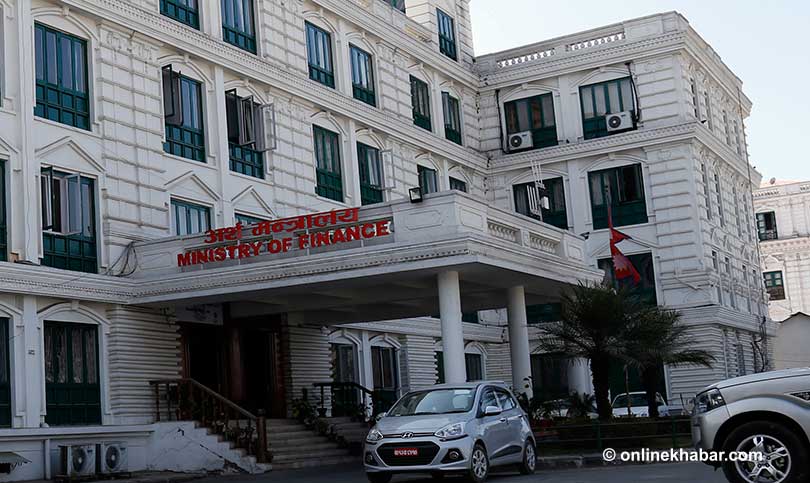
According to the Ministry of Finance, the minimum income threshold was raised to reduce the tax burden. Under the Economic Act 2083, employment income up to 1 million rupees a year will now attract only a 1 percent tax.
However, this provision will not apply to income of individuals who are sole-proprietorship taxpayers and who contribute retirement income to a retirement fund or a contribution-based social security fund.
For taxable income above 1 million but up to 1.5 million rupees, the tax will be 10,000 rupees on the first 1 million plus 10 percent on the amount exceeding 1 million.
For taxable income above 1.5 million up to 2.5 million rupees, the budget sets the tax at 60,000 rupees on the first 1.5 million plus 20 percent on the amount exceeding 1.5 million.
For taxable income above 2.5 million rupees, the tax is set at 260,000 rupees on the first 2.5 million plus 27 percent on the amount exceeding that, and for taxable income above 4 million rupees, an additional 2 percentage points is levied on the excess amount.
Currently, under the Income Tax Act 2058, only a 1 percent social security tax applies to the first 500,000 rupees of annual income for individuals and the first 600,000 rupees for couples.
Above that, the next 200,000 is taxed at 10 percent, the next 300,000 at 20 percent, the next 1 million at 30 percent, and the next 3 million at 36 percent, with income above 5 million taxed at 39 percent under the existing legal provision.
View original source — OnlineKhabar ↗
Related stories

The Local
PoliticsJul 17, 2026 · 1 min
Nicaragua cuts ties with Italy over 1978 PM assassination dispute
The Local

Lovin Malta
PoliticsJul 17, 2026 · 1 min
258 Fake Blue Disability Badges Collected In Malta Since 2023
Lovin Malta
ABC News
PoliticsJul 17, 2026 · 1 min
Breaking: Moira Deeming ousted as Liberal candidate after apology stand-off
ABC News

Straits Times
PoliticsJul 17, 2026 · 1 min
Trump’s claims that China stole voters’ data unlikely to derail September summit
Straits Times