Indian Express
AIADMK’s ‘vanishing act’: As 10 MLAs look for crossover, Vijay nears a majority
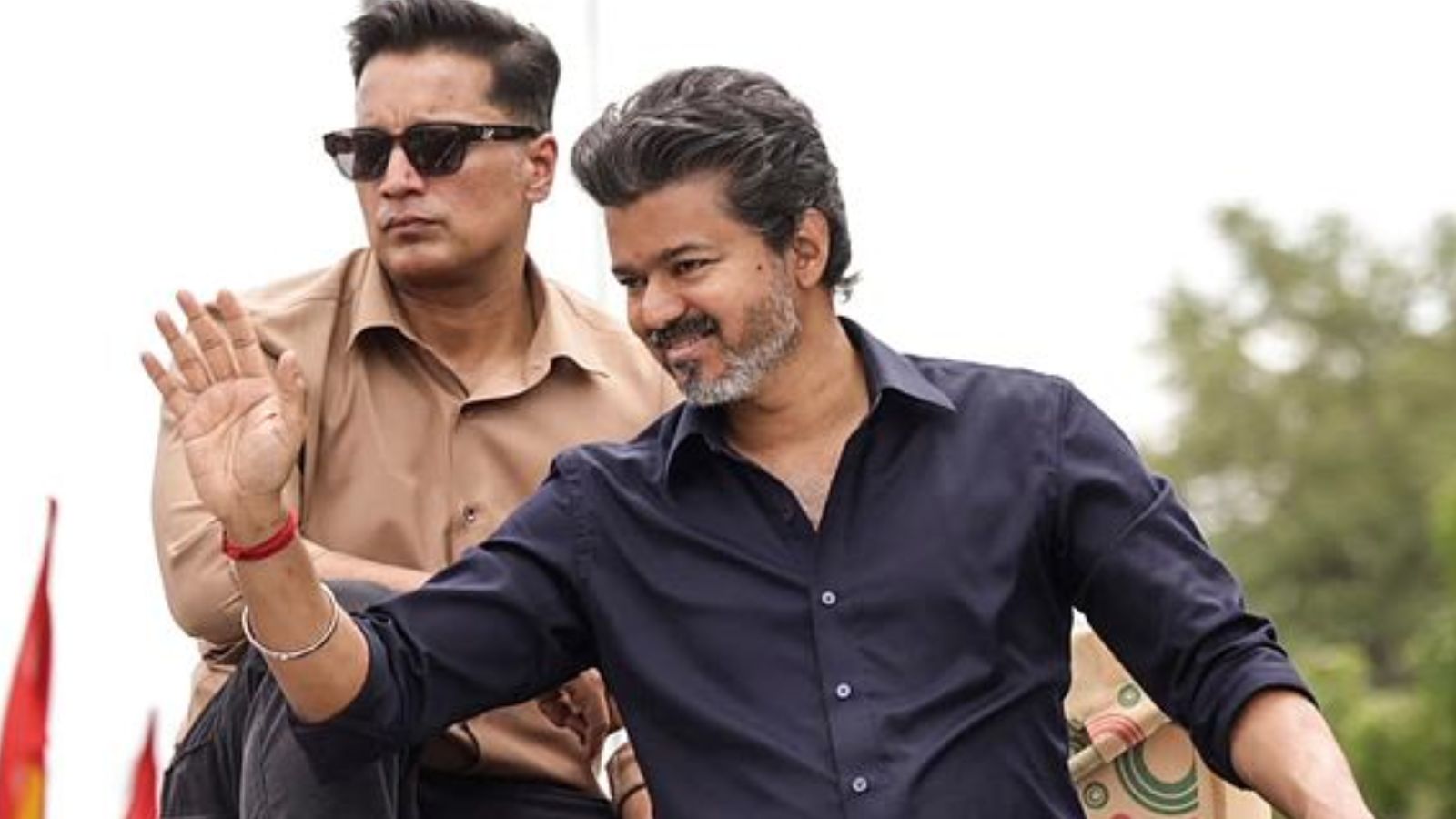
What began inside the Chief Minister C Joseph Vijay-led Tamilaga Vettri Kazhagam (TVK) in Tamil Nadu as a discreet political exercise – informally referred to by party insiders as “Operation L” – now appears to be entering its decisive phase.
According to multiple sources involved in ongoing negotiations between TVK leaders and dissident AIADMK legislators, around 10 MLAs of the Opposition party are likely to resign their Assembly seats and formally join the ruling outfit before August 15.
If that timetable holds, such resignations may coincide with the Election Commission (EC)’s expected announcement of the next round of Assembly by-elections. “This process will largely be completed before Independence Day,” said a senior leader involved in the negotiations. “The objective is to finish the political transition before the by-election schedule begins.”
The latest phase follows a steady stream of resignations over the past several weeks. Of the 25 AIADMK MLAs who had defied the party whip and backed Vijay’s bid to form the government in May, nearly half have either crossed over to the TVK or are possibly in the process of doing it.
In the 234-member Tamil Nadu Assembly, seven seats are vacant now, reducing its strength to 227. The TVK’s current tally stands at 107.
Former AIADMK ministers C Vijayabaskar and M R Vijayabhaskar joined the TVK recently after resigning as MLAs, alongside former ministers M S M Anandan, S Valarmathi and several former MLAs and district-level functionaries.
Earlier, four AIADMK legislators had resigned and crossed over to the TVK, reducing the Opposition’s numerical strength while taking the ruling party closer to a majority mark and expanding its organisational footprint across districts.
Senior leaders said the next batch is expected to include legislators politically aligned with influential AIADMK figures such as S P Velumani and C Ve Shanmugam, both of whom are regarded as among the party’s strongest regional power centres. According to TVK and AIADMK sources, both leaders themselves are expected to join the TVK before the end of July or early August.
The negotiations, sources said, extend well beyond simple defections. Those looking to quit their Assembly seats are being assured opportunities to recontest upcoming by-elections on TVK tickets. Senior leaders are understood to have been promised Cabinet positions if re-elected, while others may be accommodated in the TVK as district secretaries and office-bearers, sources said.
A senior AIADMK leader, who is widely believed to be preparing to switch sides, said the exodus reflected years of frustration rather than sudden political opportunism. “It was Edappadi Palaniswami’s wish to remain general secretary until his last day,” the leader said. “Many of us waited even after losing district secretary posts. There was no meaningful attempt to resolve the crisis.”
The removal of district secretaries loyal to influential leaders, particularly Velumani, had accelerated internal dissatisfaction within the AIADMK, several party leaders said.
For many legislators, the calculations are also practical. With the AIADMK reduced to 41 MLAs following successive resignations and the TVK steadily consolidating power, many legislators fear uncertain electoral prospects if they remain in a diminished AIADMK.
Yet, political arithmetic is only part of the story. Opposition leaders have repeatedly alleged substantial financial inducements accompany the ongoing defections. For some former ministers, joining the TVK also potentially alters the political context surrounding pending corruption investigations. The TVK has rejected allegations of horse-trading.
Former health minister C Vijayabaskar, for instance, has long faced corruption allegations. The Opposition questioned whether such leaders are entering what DMK leaders described as a political “washing machine”.
TVK leaders have rejected such charges, arguing that legal proceedings will continue independently. Inside the ruling party, however, preparations are already said to be underway for a Cabinet expansion following the bypolls.
A senior TVK functionary said at least five heavyweights from the AIADMK are expected to find places in Vijay’s Cabinet, including Velumani, Shanmugam, C Vijayabaskar and M R Vijayabhaskar. If realised, the exercise would reduce Vijay’s dependence on post-election allies while simultaneously transplanting experienced district-level political machinery into a party that remains organisationally young.
What appears different this time is the scale and sequencing. Rather than attempting a major political coup, the TVK has chosen inductions in phases.
The insistence on resigning before crossing over appears to have been a consistent feature of Vijay’s strategy.
MDMK general secretary Vaiko publicly stated that Vijay had requested him to persuade the party’s two MLAs – who were elected on the DMK’s symbol – to resign their Assembly seats before aligning with the TVK, promising to campaign for them in the ensuing bypolls. The two MLAs, however, refused to resign and chose to remain with the DMK. Similarly, former AIADMK minister M R Vijayabhaskar said he too had been asked by Vijay to first resign as MLA before joining the TVK.
Together, the episodes suggest that the TVK leadership has sought to avoid retaining legislators elected on rival party symbols, preferring instead to seek a fresh mandate through by-elections, even as the Opposition has characterised the process as “horse-trading”.
View original source — Indian Express ↗
Related stories

Philippine Daily Inquirer
WorldJul 12, 2026 · 1 min
WPS: 14 countries reaffirm ruling vs Beijing's South China Sea claims
Philippine Daily Inquirer
Philippine Daily Inquirer
WorldJul 12, 2026 · 1 min
Habagat to continue bringing rain to Cebu, but expected to weaken
Philippine Daily Inquirer

The Hindu
WorldJul 12, 2026 · 1 min
U.S. military says it is striking Iran in response to attack on civilian vessel in Strait of Hormuz
The Hindu

Philippine Daily Inquirer
WorldJul 12, 2026 · 1 min
Tarlac State University opens doors to first blind students
Philippine Daily Inquirer