Indian Express
Nafisa Ali says she’s in fourth stage of cancer, in remission: ‘Won’t be silenced now’
5 min readMumbaiJul 18, 2026 10:47 AM IST
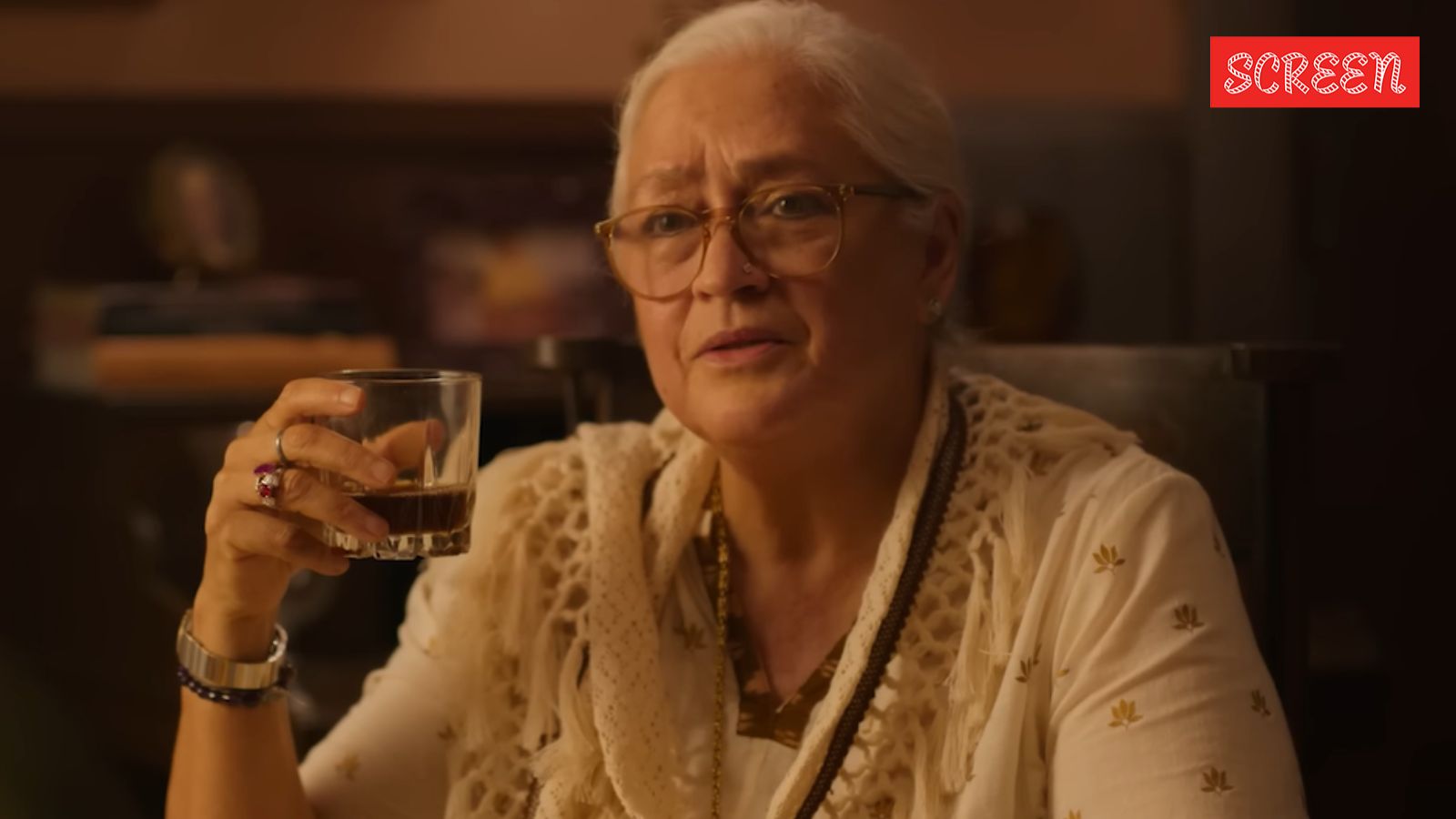
Nafisa Ali in a still from Max, Min and Meowzaki
Last week, as Mumbai disappeared beneath relentless monsoon showers, an interview came to an end with a moment with veteran actors Nafisa Ali and Nasser sharing a quick, warm, wordless hug. It was direct a response to what Nafisa had just spoken about with remarkable conviction. Even as she continues her battle with Stage 4 peritoneal and ovarian cancer, she refused to let the conversation be defined by illness alone. Instead, she spoke about purpose, responsibility, and the courage to leave the world better than we found it. Nasser, visibly moved, embraced her as the interview concluded.
‘World definitely deserves to be a better place’
In an exclusive conversation with SCREEN, Nafisa said, “I always believe that a human being is put on this earth for a purpose. And it’s important that every human being does good for this planet, because it’s only one little planet in the cosmos, in the universe. And cancer is something that tears families apart. It tears your financial balance apart. It is the scariest journey that I have ever been on because earlier I could fight for the world; now I’m fighting for my life.”
She then added, “I’m in the fourth stage of cancer, in remission for the third time. So it has taught me that I need to leave a message for my children, for my family, and for the young people: that the world definitely deserves to be a better place. And I will not step back and allow the powers that be to silence me. I want to tell the truth because, one, it is the future that belongs to everybody else. And we owe it to them to do right.”
The actors, who will soon share screen space in the upcoming romantic drama Max, Min and Meowzaki, releasing on July 24, spoke about the importance of backing intimate, human stories at a time when hyper masculine, violence-driven narratives increasingly dominate mainstream cinema. Ali, in particular, argued that films rooted in empathy and family hold far greater value in today’s social climate.
‘Politically sponsored cinema is a threat to democracy’
“I hate violence in cinema because I think the youth of India don’t deserve to know that part, because a lot of it is politically sponsored today, which nobody has the guts to bring out. It’s a threat to democracy, for me, as an artist. And therefore, a film like this shares the importance of what family should be.” Nasser, who has acted in more than 500 films over a career spanning five decades and is widely recognised by younger audiences for his work in SS Rajamouli’s Baahubali franchise, reflected on the distinction between cinema that merely entertains and cinema that leaves an emotional imprint. According to him, films like Max, Min and Meowzaki offer audiences something far more enduring than escapist spectacle.
Nasser in a still from Max, Min and Meowzaki
“When you escape from reality by watching a man kill hundreds of people single-handedly, it’s only an escape. But here, you can see yourself in the film. You can see your uncle, you can see your auntie, you can see your own people. So you come closer to this kind of film. When you go out of the film, you feel nice.” He added, “So there is a difference between, I don’t know, in my vocabulary, pleasure and happiness? Pleasure and happiness cannot be the same. You may get pleasure from watching an action movie. But here, when you watch this kind of thing, you feel happy. Your soul becomes full.”
Also Read | In Diljit Dosanjh’s Satluj, the state writes the obituary but the river remembers the truth
Story continues below this ad
D-Day over Dhurandhar
Speaking about portrayal of violence in cinema, Dhurandhar inevitably entered the discussion. Nasser drew a distinction between Aditya Dhar’s revenge-driven spectacle and D-Day, the 2013 spy thriller in which he starred. While both films revolve around Indian intelligence operations on Pakistani soil, he said he preferred the grounded, more realistic approach adopted by D-Day. “See, D-Day was entirely different. Even though it was also a fictional story, it was much closer to reality. But Dhurandhar was on a much larger canvas. Still, I prefer D-Day’s way of dealing with an issue like that.” And speaking of issues, for Ali, however, the larger conversation was about cinema with purpose. Reflecting on her film choices, she pointed to Life in a Metro, in which she shared screen space with the late Dharmendra, as an example of storytelling that can genuinely influence society.
“Life in a Metro was again a very important film because the message there, again, is that if, as an elder, you are singled out or left alone in today’s world, why should you be alone? that’s why I did Life in a Metro. And there are many people whom I’ve met at airports and at functions who told me that after seeing this movie, they allowed their single parent to remarry. So the importance of doing cinema like that is very important for me because you only think about yourself. the importance of understanding somebody else’s point of view can only be visualised through cinema that portrays a seriousness of purpose.”
© IE Online Media Services Pvt Ltd
Anas Arif is a prolific Entertainment Journalist and Cinematic Analyst at The Indian Express, where he specializes in the intersection of Indian pop culture, auteur-driven cinema, and industrial ethics. His writing is defined by a deep-seated commitment to documenting the evolving landscape of Indian entertainment through the lens of critical theory and narrative authorship.
Experience & Career
As a core member of The Indian Express entertainment vertical, Anas has cultivated a unique beat that prioritizes the "craft behind the celebrity." He has interviewed a vast spectrum of industry veterans, from blockbuster directors like Vijay Krishna Acharya, Sujoy Ghosh, Maneesh Sharma to experimental filmmakers and screenwriters like Anurag Kashyap, Vikramaditya Motwane, Varun Grover, Rajat Kapoor amongst several others. His career is characterized by a "Journalism of Courage" approach, where he frequently tackles the ethical implications of mainstream cinema and the socio-political subtext within popular media. He is also the host of the YouTube series Cult Comebacks, where he talks to filmmakers about movies that may not have succeeded initially but have, over time, gained a cult following. The show aims to explore films as works of art, rather than merely commercial ventures designed to earn box office revenue.
Expertise & Focus Areas
Anas's expertise lies in his ability to deconstruct cinematic works beyond surface-level reviews. His focus areas include:
Auteur Studies: Detailed retrospectives and analyses of filmmakers such as Imtiaz Ali, Anurag Kashyap, and Neeraj Ghaywan, often exploring their central philosophies and creative evolutions.
Cinematic Deconstruction: Examining technical and narrative choices, such as the use of aspect ratios in independent films (Sabar Bonda) or the structural rhythm of iconic soundtracks (Dilwale Dulhania Le Jayenge).
Industrial & Social Ethics: Fearless critique of commercial blockbusters, particularly regarding the promotion of bigoted visions or the marginalization of communities in mainstream scripts.
Exclusive Long-form Interviews: Conducting high-level dialogues with actors and creators to uncover archival anecdotes and future-looking industry insights.
Authoritativeness & Trust
Anas Arif has established himself as a trusted voice by consistently moving away from standard PR-driven journalism. Whether he is interrogating the "mythology of Shah Rukh Khan" in modern sequels or providing a space for independent filmmakers to discuss the "arithmetic of karma," his work is rooted in objectivity and extensive research. Readers look to Anas for an educated viewpoint that treats entertainment not just as a commodity, but as a critical reflection of the country's collective conscience. ... Read More
Click here to follow Screen Digital on YouTube and stay updated with the latest from the world of cinema.
Tags:
nafisa ali
Nasser
View original source — Indian Express ↗
Related stories

Philippine Daily Inquirer
EntertainmentJul 18, 2026 · 1 min
2 nabbed, P569,000 smuggled cigarettes seized in Camarines Norte
Philippine Daily Inquirer

Philippine Daily Inquirer
EntertainmentJul 18, 2026 · 1 min
P7.4-M 'shabu' seized, 203 arrested in Cagayan Valley operations
Philippine Daily Inquirer
Indian Express
EntertainmentJul 18, 2026 · 1 min
Paresh Rawal said Akshay Kumar didn’t give him OMG 2 credit; director slams him: ‘Why now?’
Indian Express

Indian Express
EntertainmentJul 18, 2026 · 1 min
Meet the animals that breathe through their skin, gut, and more
Indian Express